In recent years developmental education began shifting from a reliance on high-stakes testing in reading and writing to a multiple measures model for assessment. The multiple-measures model, which opens up a whole new array of writing opportunities for English Language Learning students, also aligns with good practices in course design, in the hybrid modality. This article describes a Grammar Adventure Game that two faculty members at Hostos Community College (CUNY), developed using Twine. The Grammar Adventure game served both as an alternative to a traditional grammar assignment, and as a pre-writing activity for a creative writing assignment, in an intermediate English as a Second Language (ESL) course. The authors discuss students’ experience using this gamified approach, and why it works in the hybrid environment.
Author: Charmaine Aleong RN, RD, MS, MSN Associate Professor
Bronx Community College of the City University of New York (CUNY)
Charmaine Aleong is a Registered Nurse and Registered Dietitian. Ms. Aleong holds a Master’s Degree in Nutrition from Teacher’s College, at Columbia University, and a Master’s Degree in Nursing, from Lehman College of the City University of New York (CUNY). She also received training as a Master Gardener at the Cornell University Cooperative Extension. Ms. Aleong is presently an Associate Professor at Bronx Community College (BCC), CUNY, where she teaches courses in nutrition, as well as personal and community health.
Ms. Aleong is the coordinator of the Dietetic and Nutrition program at BCC, where she also serves as advisor to the Food and Garden Club. In this capacity, her objective is to improve healthy eating behavior by empowering students with the ability to prepare healthy low cost meals as well as grow some of their own food, in an urban environment. She educates students on the growing of seasonal vegetables in the college demonstration garden, and creates “garden to table” cooking experiences, during club hours. The popularity of the college’s Food and Garden Club has led to Ms. Aleong being voted outstanding club advisor for the past 2 years. Ms. Aleong also works with the BCC Food Pantry to help reduce food insecurity in this urban population, which is at high risk for chronic health issues. These issues arise from the community’s limited sources of affordable, healthy food choices and lack of knowledge about healthy food options.
Contact info: Address: 2155 University Avenue, Bronx, NY 10453 Email:charmaine.aleong@bcc.cuny.edu Phone: 718-289-5100 ext. 5048
Author: Kate Wolfe, Ph.D. Assistant Professor, Psychology, Behavioral & Social Sciences Dept.
Chair, Educational Technology & Leadership Council (ETLC)
Co-Chair Hostos Online Learning Assessment (HOLA) Committee
Faculty Liaison to Education Technology
Hostos Community College of the City University of New York (CUNY)
Kate Wolfe earned her Ph.D. in Social Psychology at the University of Houston. She is an Assistant Professor of Psychology in the Behavioral and Social Sciences Department at Hostos Community College, CUNY. She is a social psychologist with research interests in quantitative reasoning and quantitative literacy among urban community college students, student perceptions of online learning, using iPads in teaching, linking general psychology and statistics to help reduce the number of remedial math courses taken by students, and urban college student attitudes toward sexual minorities. Regarding quantitative reasoning, she is interested in student perceptions of their own quantitative literacy and student abilities in performing QR tasks such as analyzing pie charts. She co-chairs the Hostos Online Learning Initiative and is chair of the Educational Technology and Leadership Council. This project resulted in numerous conference presentations as well as an article in the Hispanic Educational Technology Services Online Journal in Spring 2016, Hostos Online Learning Assessment: A Survey of Student Perceptions. In 2014-2015 she was a Visiting Scholar at Teachers College, Columbia University as Fellow of the Metropolitan Colleges Institute for Teaching Improvement, a program that focused on the nature of a liberal education at urban colleges. She is beginning the research on attitudes of students in a Hispanic-serving institution toward others based on gender identity or sexual orientation with particular attention on allied health students.
Contact info: Address: Hostos Community College, 500 Grand Concourse B-346, Bronx, NY 10451 Phone: 718-518-6894 Email:KWOLFE@hostos.cuny.edu
Author: Jacqueline DiSanto, Ed.D. Associate Professor
Hostos Community College of the City University of New York (CUNY)
Dr. Jacqueline M. DiSanto is an Associate Professor and Unit Coordinator (for Early-Childhood Education) in the Education Department at Hostos Community College of the City University of New York. She earned a B.S. and M.A. in Business Education (NYU), a professional diploma in Administration (Fordham), and an Ed.D. (St. John’s University) in Instructional Leadership. Her areas of publication includes: online education, learning styles, translanguaging, and faculty development. She is a founding member of the Peer Observation and the Scholarship of Teaching and Learning Committees, and a member of the Instructional Evaluation Committee and college-wide Senate. She is a co-investigator in a grant-funded consortium for Open Educational Resources; Dr. DiSanto is coordinating the efforts to convert the complete 60-credit A.A.S. in Early-Childhood Education from for-pay textbook reliance to providing all content without charge to students.
Author: Iber Poma Coordinator of Student Services, Educational Technology
Hostos Community College of the City University of New York (CUNY)
Poma have worked in the Educational Technology field for over 20 years. He have earned an AA and a BS in Computer Science. He had also developed workshop curriculum and taught hybrid and fully Online Workshops for Students; and have participated in the creation of guidelines for Hybrid and Fully Online at Hostos for faculty. The “Are you Ready” tool in Blackboard for online students was created seeking to understand exactly what hybrid or online learning means at Hostos. Through his involvement in Educational Technology, he had seen first-hand that EdTech has the potential to become a catalyst of change for faculty–streamlining time-consuming processes (like lesson planning, reporting, and attendance) and simplifying communication through Blackboard. Poma feels that the engagement between faculty and students are one of the key ingredients to really embrace online teaching by using technology tools to accomplish this modality of learning.
Author: Wilfredo Rodríguez Educational Technology Coordinator
Hostos Community College of the City University of New York (CUNY)
Wilfredo Rodríguez, works at the office of Educational Technology Coordinator since April 2012, after holding different positions at the college. He oversees the daily operations of the office and implement many different projects. He began as an ESL/Spanish tutor back in 2002 in the Coordinated Undergraduate Program (CFP). After working for two years in CFP and also facilitating writing workshops, he began working as an administrative assistance in 2004 for the Title V Grant. When the grant expired, he went to work for the Office of Academic Affairs as a HEO where undertook different responsibilities. Rodríguez holds a M.S. and B.S. in Computer Science from Lehman College, CUNY. After graduating, he continuously keep renovating and updating knowledge in the field by researching the newest technology and how it adapts to education. He’s always fascinated by programming and how it improves productivity and human life in general. Wilfredo also had been programming in Asp.net MVC framework for a couple of years already and already have developed many applications and supported many others that he inherited when the programmer left from the Educational Technology Department.
Contact info: Address: Hostos Community College – CUNY, 500 Grand Concourse, C-556, Bronx, NY 10451 Phone: 718-319-7973 Email:WRODRIGUEZ@hostos.cuny.edu
Author: Nancy Velázquez-Torres, PhD Associate Professor
John Jay College of Criminal Justice of the City University of New York (CUNY)
Nancy Velázquez-Torres is an Associate Professor at John Jay College. She holds a Ph.D. in Curriculum, Instruction and Learning Technologies from New Mexico State University, a Masters in TESOL K-12 and Multicultural Education from Queens College, CUNY and a Bachelors in Secondary Education in TESOL from Inter American University of Puerto Rico. She also has an extensive background in developmental education, multicultural education, curriculum design, bilingualism, learning technologies and assessment. Dr. Velázquez-Torres has occupied faculty and administrative positions at several institutions in New York, New Jersey and Puerto Rico. During her over thirty years of experience, she has developed and taught approximately 50 courses.
In her last administrative position as the Director of the Percy Ellis Sutton Program and Chair of the SEEK Department at John Jay for almost seven years, the pass rates and retention rates of SEEK students increased significantly. The use of data from the assessment tools incorporated under her leadership facilitated the restructuring of services and interventions provided to students. Dr. Velázquez-Torres’ academic and research interests are in teaching millennial and underprivileged students, culturally responsive pedagogy and the use of the emerging technologies to enhance learning. She has also written and managed numerous grants and has used her grant writing experience and background in curriculum design and learning technologies to develop projects that benefit underserved and disadvantaged groups and meet the needs and demands of 21st century learners. Moreover, she has received several awards and recognition for innovative teaching. She is also actively involved in several community projects in New York and Puerto Rico and in her church.
Assistant Professor
Inter American University of Puerto Rico, Ponce Campus
Full-time faculty at Inter-American University of Puerto Rico, Ponce Campus, since 2016. Offered graduate and undergraduate online courses in the following subjects: distance education, leadership, office information systems, human resources, psychology-APA style. Worked as part-time faculty at the Inter-American University of Puerto Rico, Ponce Campus from 2003-2016. Also, from 2003-2016 worked as an assistant dean at the deanship of studies office. Among the responsibilities were the following: manage the assessment of academic programs, manage the tutoring center, and be in charge of the administrative aspects in the graduate program.
Completed a doctoral degree in Instructional Technology and Distance Education from Nova Southeastern University, in 2016. The title of the dissertation was the competencies of faculty that offer online courses at a post-secondary institution in Puerto Rico. Completed two master’s degrees in Business Administration in Human Resources and in Information Management Systems, 2001 at the Inter-American University of Puerto Rico, San Germán Campus. Completed a bachelor’s degree in Secretarial Sciences in 1983, also at the Inter-American University of Puerto Rico, San Germán Campus.
Associate Professor
Bronx Community College of the City University of New York (CUNY)
Charmaine Aleong is a Registered Nurse and Registered Dietitian. Ms. Aleong holds a Master’s Degree in Nutrition from Teacher’s College, at Columbia University, and a Master’s Degree in Nursing, from Lehman College of the City University of New York (CUNY). She also received training as a Master Gardener at the Cornell University Cooperative Extension. Ms. Aleong is presently an Associate Professor at Bronx Community College (BCC), CUNY, where she teaches courses in nutrition, as well as personal and community health.
Ms. Aleong is the coordinator of the Dietetic and Nutrition program at BCC, where she also serves as advisor to the Food and Garden Club. In this capacity, her objective is to improve healthy eating behavior by empowering students with the ability to prepare healthy low cost meals as well as grow some of their own food, in an urban environment. She educates students on the growing of seasonal vegetables in the college demonstration garden, and creates “garden to table” cooking experiences, during club hours. The popularity of the college’s Food and Garden Club has led to Ms. Aleong being voted outstanding club advisor for the past 2 years. Ms. Aleong also works with the BCC Food Pantry to help reduce food insecurity in this urban population, which is at high risk for chronic health issues. These issues arise from the community’s limited sources of affordable, healthy food choices and lack of knowledge about healthy food options.
Contact info: Address: 2155 University Avenue, Bronx, NY 10453 Email:charmaine.aleong@bcc.cuny.edu Phone: 718-289-5100 ext. 5048
Associate Professor
John Jay College of Criminal Justice
of the City University of New York (CUNY)
Nancy Velázquez-Torres is an Associate Professor at John Jay College. She holds a Ph.D. in Curriculum, Instruction and Learning Technologies from New Mexico State University, a Masters in TESOL K-12 and Multicultural Education from Queens College, CUNY and a Bachelors in Secondary Education in TESOL from Inter American University of Puerto Rico. She also has an extensive background in developmental education, multicultural education, curriculum design, bilingualism, learning technologies and assessment. Dr. Velázquez-Torres has occupied faculty and administrative positions at several institutions in New York, New Jersey and Puerto Rico. During her over thirty years of experience, she has developed and taught approximately 50 courses.
In her last administrative position as the Director of the Percy Ellis Sutton Program and Chair of the SEEK Department at John Jay for almost seven years, the pass rates and retention rates of SEEK students increased significantly. The use of data from the assessment tools incorporated under her leadership facilitated the restructuring of services and interventions provided to students. Dr. Velázquez-Torres’ academic and research interests are in teaching millennial and underprivileged students, culturally responsive pedagogy and the use of the emerging technologies to enhance learning. She has also written and managed numerous grants and has used her grant writing experience and background in curriculum design and learning technologies to develop projects that benefit underserved and disadvantaged groups and meet the needs and demands of 21st century learners. Moreover, she has received several awards and recognition for innovative teaching. She is also actively involved in several community projects in New York and Puerto Rico and in her church.
Associate Professor, Department of Health Physical Education and Recreation
Bronx Community College of the City University of New York (CUNY)
Abstract
Food insecurity and poor eating habits among college students and their implications have become important subjects of both academic research and practical interest for administrators and policy makers. Community college teachers in the field of nutrition, public health and healthy lifestyles are often confronted with a divergence between the theoretical and practical contents of their courses and the actual wellness and lifestyle practices of their students. Since many of these students are future health care providers and public health promoters as part of a trend to diversify the health care workforce, this issue now takes on a particular relevance. This article describes how a food and garden club, in association with a human nutrition course in a very diverse community college population, has addressed these problems and has been instrumental in effecting change in the dietary habits of these students from a high-risk urban community.
Kate S. Wolfe, Ph.D.
Department of Behavioral and Social Sciences
Hostos Community College of the City University of New York (CUNY)
Dr. Jacqueline M. DiSanto
Department of Education
Hostos Community College of the City University of New York (CUNY)
Iber Poma
Educational Technology Department
Hostos Community College of the City University of New York (CUNY)
Wilfredo Rodríguez
Educational Technology Department
Hostos Community College of the City University of New York (CUNY)
Abstract
This article is a follow-up article to our 2016 publication in this journal. The authors examined data from two cohorts, Fall 2015 and Fall 2016, to assess the stability of our survey results and learn more about student perceptions of online learning at Hostos Community College, an urban Hispanic-serving community college. Faculty have been working with the Office of Educational Technology (EdTech) as a task force to measure students’ perceptions of their online learning experiences since 2015. The Hostos Online Learning Assessment (HOLA) Task Force designed a survey to identify strengths and weaknesses in online teaching and student preparedness for online learning. Understanding these perceptions is crucial in order to build upon current best practices. Despite limitations in our sample size, this follow up study found great consistency of student perceptions across both semesters. We continue to assess student perceptions annually at Hostos Community College in order to continually improve our online teaching and learning environment.
Hostos Online Learning Assessment (HOLA) Follow-Up: Student Perceptions in Two Cohorts.
Student perceptions of online learning are integral to building upon current best practices and also gauging the preparedness of the students for the online learning environment, particularly in an urban, Hispanic-serving community college (Wolfe et al., 2016). Hostos Community College (HCC) was founded 50 years ago as part of the City University of New York (CUNY), and is located in the South Bronx, the poorest congressional district in the country. HCC enrolls approximately 7,200 students, and more than half (5,070) are enrolled full time. Sixty-three percent of students reside in the Bronx, and many come from families who reside below the poverty line. Almost 67 percent of students identify as female, and the vast majority of students (81 percent) are 29 years old or younger, with 47 percent 21 years of age or younger. Students at Hostos are ethnically diverse. Nearly 60 percent identify as Hispanic, 21 percent as Black, and 18 percent as Other/Unknown. Three percent identify as Asian and less than two percent as White. The majority of first-year students are enrolled in developmental or remedial courses (Hostos Community College, Office of the President & Office of Institutional Research and Student Assessment, 2018). Hostos is categorized under the Hispanic-Serving Institutions (HSI) program authorized by Title V of the Higher Education Act of 1965 and has received grants as a Hispanic-serving institution under the Department’s Office of Postsecondary Education (Minority Institutions, n. d.).
Universidad Interamericana de Puerto Rico, Recinto de Ponce
Las Competencias del Docente para Dictar Cursos en Línea
Resumen
El propósito de este estudio cuantitativo fue determinar las competencias del docente en línea en una institución de educación superior ubicada en Puerto Rico desde la perspectiva del docente y del estudiante. Durante el año académico 2015-2016, en la se aplicó un cuestionario a los docentes para determinar sus necesidades en cuanto a formación en pedagogía virtual; más del 65% señaló que deseaba recibir capacitación en herramientas tecnológicas. En consecuencia, resalta la importancia y necesidad de formación de los docentes en línea para ofrecer una instrucción de calidad.
Palabras Claves: Andragogía, Competencias, Competencias del docente virtual, Educación en línea, Educación superior.
The transition from high school to college can be a frightening and challenging experience for many students. This process can be even worse for first-generation, immigrants, English language learners and other disadvantaged groups. To ease the transition and reduce attrition, higher education institutions have developed a variety of summer bridge programs and first-year seminar models. Although both interventions have been widely promoted, not many studies have focused on the impact of a combined summer bridge program and a first-year seminar on the same group of students. This paper will describe John Jay College’s Search for Education, Elevation and Knowledge (SEEK) innovative summer bridge program and first year seminar course and how they have increased first year student retention and success.
Introduction
According to research, some of the major barriers to college success for at risk populations are lack of self-confidence, inappropriate expectations or knowledge about college environment, lack of connection to the college community or external community, lack of early validation within the college environment, family members who do not understand the goals of college and not involving faculty in summer bridge and the transition process (Kezar, 2000).
For decades summer bridge programs and first year seminar courses have been designed by many higher education institutions to assist incoming college students’ transition to college, mitigate the sense of fear of the unknown, increase persistence and address some of the other barriers to college success (Sabian, 2014). Recognizing that college completion remains a challenge, it is, therefore, imperative for these programs to be evaluated to determine their effectiveness in contributing to the success of at-risk student subgroups (Swanson, Vaughan, & Wilkinson, 2017; Douglas and Attewell, 2014).
The HETS Online Journal initiative was developed thanks to the leadership of Dr. Eduardo Martí, former HETS Chairman, and President of Queensborough Community College, CUNY. His vision of sharing high quality articles, helped HETS established the terms to designate an Editorial Board responsible of reviewing the articles received, and developed guidelines for the article submissions. The members of the Editorial Board are designated and approved by the HETS Board of Directors, constituted by all Presidents or designated representatives of HETS member institutions. HETS staff role is to oversee the reviewing process, and coordinate the article evaluations with the editorial board members. Also, a rubric was designed to create guidelines consistent with a Journal, that is rigorous in nature, and will provide guidance for the editors, reviewers and researchers submitting their work for review.
A report of the reviewing process for each Issue is presented to the Board of Directors during their meetings which are held twice a year. The Chief Editor is invited to these Board meetings to discuss and clarify any doubts about this process, and make recommendations to enhance and strengthen this initiative. We are pleased to share the following documents (in a downloadable format) with information about:
For more information about the Online Journal, its Editorial Board or the article review process, do not hesitate to contact the HETS office via email to info@hets.org.
“Take education to a higher level. Let’s share our knowledge with the world”
Author: Jody Resko, Ph.D. Clinical Associate Professor
Ferkauf Graduate School of Psychology &
Adjunct Assistant Professor
Queensborough Community College of the City University of New York (CUNY)
Jody Resko, Ph.D. is a Clinical Associate Professor at Ferkauf Graduate School of Psychology in the Mental Health Counseling Program. She is also an Adjunct Assistant Professor at Queensborough Community College / CUNY.
Dr. Resko has a degree in Educational Psychology from the Graduate School and University Center/CUNY. She has studied trauma and PTSD in children and adolescents. Her work in this area has inspired her to study how individuals cope with trauma, focusing on resilient attitudes and hardiness. She is currently working on a research study to identify resilient attitudes among students.
Contact Information:
Jody Resko, Ph.D.
Clinical Associate Professor,
Ferkauf Graduate School of Psychology &
Adjunct Assistant Professor
Queensborough Community College of the City University of New York (CUNY)
Email: jreskophd@gmail.com
Author: Dr. Monika Sikand
Assistant Professor
Department of Engineering, Physics and Technology
Bronx Community College of the City University of New York (CUNY)
Monika Sikand is an Assistant Professor in the Department of Engineering, Physics and Technology at Bronx Community College (BCC-CUNY). Dr Sikand has published research in Radiative Transfer involving in situ radiometric and cloud measurements collected in a unique tethered balloon study in the Arctic. Her research interests include the use of remote sensing to study radiative transfer in the atmosphere, oceans and coupled systems that could help understand the radiation budget of earth, climate change, interdisciplinary education, and numeracy in undergraduate education. Dr. Sikand is an Astronomy coordinator and teaches Physics, Astronomy and Interdisciplinary Education in Sustainability in the Department of Engineering, Physics and Technology.
Sikand, M., Koskulics, J., Stamnes, J., Hamre, B., Lawson, P., Stamnes, K. (2013). Estimation of mixed-phase cloud optical depth and position using in situ radiation and cloud microphysical measurements obtained from a tethered balloon platform. Journal of Atmospheric Sciences, 70, 317-329.
Sikand, M., Koskulics, J., Stamnes, J., Hamre, B., Lawson, P., Stamnes, K. (2010). Optical properties of mixed-phase boundary layer clouds observed from a tethered balloon platform in the Arctic. Journal of Quantitative Spectroscopy and Radiative Transfer, 111, 1921-1930.
Author: Dr. Nelson Reynoso
Associate Professor, Departments of Social Sciences, Psychology Division, Bronx Community College of the City University of New York (CUNY)
Dr. Reynoso has worked at Bronx Community College of the City University of New York since 1996. During his tenure at Bronx Community College, he has served as Director of Counseling and as an Associate Professor in the General Counseling Department. Dr. Reynoso has experience teaching freshman seminars in the learning community program at Bronx Community College. Dr. Reynoso currently teaches a freshman seminar entitled, “Positive Psychology: Fostering Resiliency and Academic Achievement among College Students.” Dr. Reynoso has extensive knowledge of Latino studies, research and teaching. He has infused Latino culture in his courses.
Dr. Reynoso developed and taught an experimental psychology course entitled, “Latino Psychology” at the City College of the City University of New York. Students found the course extremely beneficial. As a founding member of the Dominican Studies Institute at the City College, he has conducted research on the Dominican Diaspora. Dr. Reynoso recently deposited in the Dominican Studies Archives a collection of oral history interviews documenting the immigration experience of Dominican immigrants. He has published numerous articles on the immigration and resiliency of Dominicans in higher education. He has presented his research findings at numerous conferences both locally and internationally.
Contact information:
Dr. Nelson A. Reynoso
Bronx Community College of the City University of New York
2155 University Avenue, Bronx, New York 10453
Email: Nelson.reynoso@bcc.cuny.edu
Tel. 718-289-5247
Co-author: José A. Medina-Talavera, EdD Adjunct Professor
Instructional Technology & Distance Education
Universidad Internacional Iberoamericana (UNINI/FUNIBER)
Doctor of education, major in Instructional Technology and Distance Education from NOVA Southeastern University. Director of doctoral research at Universidad Internacional Iberoamericana (FUNIBER/UNINI). Principal Professor for main courses: Computer Tools for Project Management and Project Evaluation for the Master’s Program in Design, Management and Direction of Projects from the Universidad Internacional Iberoamericana (UNINI/FUNIBER). Member of the Advisor’s Committee for Curriculum Review of the Universidad International Iberoamericana (UNINI/FUNIBER). Adjunct Professor of ‘Educational Technology’ at Broward International University. Instructional Designer and Facilitator of the courses: Virtual Education and Technology and Curriculum Design for Virtual Education of the Master’s Program in Virtual Education at Broward International University.
Contact information:
José A. Medina-Talavera, EdD
Adjunct Professor
Instructional Technology & Distance Education
Universidad Internacional Iberoamericana (UNINI/FUNIBER)
Address: Ave. José A. Cedeño, # 521, Arecibo, PR 00612
Email: Jose.medina@unini.org
Author: Prof. Carolina Schmeisser
Professor, Don Bosco Technical Institute, Rosemead, CA and
Doctoral Candidate, Universidad Internacional Iberoamericana (UNINI), Mexico
Carolina Schmeisser, born in Chile has been living in Los Angeles, California since 1993. In 2009 I finished her Bachelor Degree in Spanish from California State University, Los Angeles. In 2010, completed a Master Degree in Spanish Literature from CSU.
Schmeisser has twelve years of experience teaching as a Spanish teacher at Don Bosco Technical Institute, Rosemead, California. As Spanish Club leader and National Hispanic Honor Society Chair person, she has been in charge of different activities: All Nation Day (Flag Day), induction ceremonies, and others. As a life-long learner, her passion for education has motivated her to pursue higher education, as I she is currently in the last year of a Ph.D program in Education, at the Universidad Internacional Iberoamericana (UNINI), Mexico. Her research led to study technology in the classroom and explore new teaching methodology. As an educator, she’s passionate about teaching others the importance of tolerance, respect, and courage, and Spanish Literature is a great way to bring people together to learn.
Contact information:
Prof. Carolina Schmeisser
Universidad Internacional Iberoamericana UNINI, Mexico
Cel. Phone: (213) 321-2634
Email: carolinaschmeisser2014@gmail.com



 Author: Charmaine Aleong RN, RD, MS, MSN
 Author: Kate Wolfe, Ph.D.
 Author: Jacqueline DiSanto, Ed.D.
 Author: Iber Poma
 Author: Wilfredo Rodríguez
 Author: Nancy Velázquez-Torres, PhD
 sistant Professor

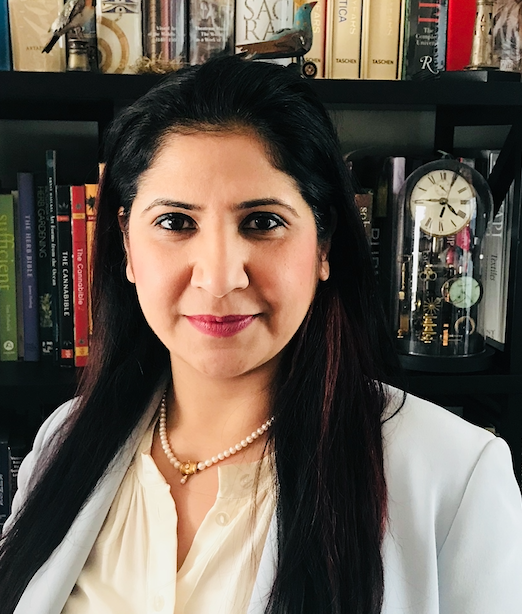
 Author: Dr. Nelson Reynoso
 Co-author: José A. Medina-Talavera, EdD