Article 1: College Student Inventory Overall Risk and Persistence for First Year Students in College Discovery Program At Bronx Community College.
Author: Dr. Annecy Baéz
Associate Professor and Director of the Social Work Latino
Student Initiative, Project Director of the HRSA Scholarships for Disadvantaged Students Touro College Graduate School of Social Work
Dr. Baéz is an Associate Professor and Director of the Social Work Latino Student Initiative, and Project Director of the HRSA Scholarships for Disadvantaged students at Touro College Graduate School of Social Work. She has been a clinical social worker for more than thirty years providing trauma informed mental health services to individual, groups and families in such agencies as the Madeline Borg clinic of the Jewish Board of Family and Children’s Services in the Bronx, and the Hispanic Clinic at Columbia Presbyterian Hospital, to name a few. She was formerly the Director of the Diagnostic Center at Julia Dyckman Andrus Memorial, a diagnostic residential center for traumatized children and their families.
Dr. Baéz has also worked clinically and administratively at City University of New York as a Director of the Counseling Center at Lehman College and at Bronx Community College as the Associate Dean of Student Support Services and Interim Director of the Psychological Services. At Lehman College, she created an innovative trauma informed, multi-theoretical counseling center to meet the unique mental health needs of students. She obtained various grants to create and implement such programs as Depression Screening online, and a Safe Zone training for LGBT youth, as well as groups, workshops for awareness in such areas as depression, anxiety, trauma, sexual assault, domestic violence and suicide prevention. To promote resilience, she created the Art4Wellness program, which integrated mindfulness meditation, dream work and expressive arts, as well as a stress-counseling program to increase self-care.
Contact Info:
Dr. Annecy Baéz
Associate Professor and Director of the Social Work Latino Student Initiative,
Project Director of the HRSA Scholarships for Disadvantaged Students
Touro College Graduate School of Social Work Mail Address: Touro College Graduate School of Social Work
27 West 23rd Street Room 544
New York, NY 10010 Portal:https://gssw.touro.edu/master-of-social-work/faculty/annecy-baez.php
Author 2: Víctor Rodríguez
Lecturer and Interim Coordinator of General Counseling Bronx Community College of the City University of New York (CUNY)
Mr. Víctor Rodríguez is a Lecturer and Interim Coordinator of General Counseling at Bronx Community College (BCC) of the City University of New York. He has over 25 years of counseling, advising and teaching experience at BCC as well as the City College of New York (CCNY). Over the years, he has taught psychology and freshman orientation courses. He has a Master’s degree in psychology from CCNY and a Master’s degree in Social Work from Lehman College (CUNY). In addition, he has a license to practice Social Work in New York State. He enjoys counseling and teaching where he incorporates the use of technology to motivate students both in and outside of the classroom.
A product of CUNY as well as the SEEK program (Search for Education and Knowledge), Mr. Rodríguez understands the challenges many inner-city students face today. It is not unlike his own experience growing up in the Lower East Side of Manhattan within a community that was plagued by drug addiction and violence. One of eight children born to Puerto Rican immigrants, Mr. Rodríguez was raised to value education, religion and hard work. Years later, he has the honor of sharing his knowledge and experience with students facing similar challenges. True to his Latino roots, Mr. Rodriguez is an active member of the Association for Latino Faculty and Staff at Bronx Community College, a member of El Centro: the Center for Puerto Rican Studies at Hunter College and a member of El Taller Puertorriqueño in Philadelphia. He is also an active member of the National Association of Social Workers (NASW) and the American Psychological Association (APA).
Contact Info:
Víctor Rodríguez, M.A., LMSW
Lecturer and Interim Coordinator of General Counseling
Bronx Community College of the City University of New York Mail Address: Bronx Community College of the City University of New York
2155 University Avenue, Bronx, New York 10453 Phone: (718) 289-5881
Author 3: Cynthia Suárez-Espinal
Director for the College Discovery Program Co-Chair for the Council of SEEK/CD Directors for the CUNY Office of Special programs Bronx Community College fo The City University of New York (CUNY)
Mrs. Cynthia Suárez-Espinal has worked in higher education in various capacities for over 15 years, and has brought a wealth of creativity, imagination, and innovation to the profession, as an educator, manager, and leader. Mrs. Suarez-Espinal is a Bronx native who attended St. Bonaventure University in upstate New York where she received her Bachelor’s Degree in Psychology and a Master of Science Degree in Counseling Education. Following her passion to help students and as a HEOP alumna, Mrs. Suarez-Espinal became a Counselor and shortly thereafter, Associate Director/Adviser for the Higher Education Opportunity Program at Barnard College for eight years.
In 2007, Mrs. Suarez-Espinal became the College Discovery Coordinator of Academic Support Services at Bronx Community College (BCC). Shortly thereafter in 2011, she became the Director for the College Discovery Program. She serves as the co-chair for the Council of SEEK/CD Directors for the CUNY Office of Special Programs. She is a founding member of the Gamma Rho Chapter of the Chi Alpha Epsilon National Honor Society at BCC. Mrs. Suarez-Espinal resides in the Bronx with her husband and two daughters.
Contact Info:
Mrs. Cynthia Suárez-Espinal
Director for the College Discovery Program
Co-Chair for the Council of SEEK/CD Directors for the CUNY Office of Special programs
Bronx Community College Mail Address: Bronx Community College
2155 University Avenue
Bronx, N.Y. 10453 Phone: (718)289-5726
Article 2: Implementing Technological Tools and Best Practices for Student Academic Success in STEM+H Careers.
Author: Dr. Rolando García
Associate Dean and Project Director of Title V STEM Grant School of Engineering Ing. José Domingo Pérez Universidad del Turabo (AGMUS)
Dr. Rolando García has a doctorate in Civil Engineering from the University of Puerto Rico, Mayagüez Campus (RUM), and a B.S. in Civil Engineering, also from the RUM. He has over 12 years of combined industrial and academic experience. Dr. García is currently an Associate Professor in the School of Engineering (SoE) at Universidad del Turabo (UT) where he teaches structural and geotechnical undergraduate Civil Engineering courses. He is also the Associate Dean of the SoE and the Director of a Title V USDE Grant. Before joining UT in January 2012, Dr. García was a Professor at Caribbean University and a structural engineering consultant. Dr. García’s industrial experience includes Molina, García & Asociados, a structural engineering firm, and Head of the Structural Engineering Department at RA&E, a multidisciplinary engineering and architectural firm.
Contact Info:
Rolando García González, PhD, PE
Associate Dean and Project Director of Title V STEM Grant
School of Engineering Ing. José Domingo Pérez
Universidad del Turabo (AGMUS) Mail Address: Universidad del Turabo
PO Box 3030
Gurabo, Puerto Rico 00778 Phone: 787-743-7979, xt. 4154 Fax: 787-744-5476 Email:rogarcia@suagm.edu Portal:http://www.suagm.edu/turabo/
Author 2: Dr. Lilliam Martínez
Project Director TV STEM+H Project Vice Chancellor of Academic Affair Universidad del Turabo (AGMUS)
Dr. Lilliam Martínez has a doctorate in Educational Leadership from the Universidad del Turabo, and a M.A. in Business Education from Interamerican University of Puerto Rico. She is currently the Project Director (PD) of a Title V STEM+H Grant at the Universidad del Turabo (UT) and professor at Colegio Universitario de San Juan. Dr. Martínez was the director of the Academic Support Center at UT and also been the PD for the Women’s Health and Wellness Program and the Activity Director and Project Manager for a Title V Project related to Faculty Development and Training in Instructional Technology (2005-2010) at the UT Yabucoa additional location. She has vast experience as an academic and student support program coordinator, development of instructional modules, curriculum development, and is certified in adult learning, as well.
Contact Info:
Lilliam Martínez Rolón, Ed.D.
Project Director, TV STEM+H Project
Vice Chancellor of Academic Affair
Universidad del Turabo Mail Address: Universidad del Turabo
PO Box 3030, Gurabo, PR 00778 Phone: (787) 743-7979, ext. 4887 Email:limartinez@suagm.edu
Article 3: El Impacto de la Integración de Tecnología en el Campo de la Educación.
Author: Dr. Janet Martínez
University of Texas Río Grande Valley
Dr. Janet Martínez is a faculty member at the University of Texas Rio Grande Valley. She has more than 15 years of experience in higher education and K-12th administration. Her preferred areas of research include educational technology implementation, online learning methods and service learning in higher education.
Contact info: Dr. Janet Martínez
University of Texas Río Grande Valley
Phone: (956) 882-5715
Email: janet.martinez@utrgv.edu
Article 4: La Metaevaluación en la Implantación de un Programa de Educación a Distancia: Un estudio de caso.
Author: Prof. Elsa Pinto López
Professor University of Puerto Rico, Río Piedras Campus
Elsa Pinto López is an Associate Professor at the Nutrition and Dietetics Program at the University of Puerto Rico for the past seven years where she teaches research methods in nutrition. She received funding by the USDA to implement the program Nutrition Live that allowed students to register in specific nutrition and dietetics courses in distance education format. She is a Registered Dietitian and active member of the Academy of Nutrition and Dietetics where she has served as delegate for Puerto Rico.
Contact Info:
Elsa Pinto López
Professor
University of Puerto Rico, Rio Piedras Phone: 787-764-0000 ext. 88590 Email:elsa.pinto@upr.edu
Author 2: Dr. Brenda Toro Enríquez
Professor University of Puerto Rico, Río Piedras Campus
Brenda Toro Enríquez has served a Professor at the Nutrition and Dietetics Program at the University of Puerto Rico for 12 years. Her expertise is in FoodService Management and was funded by the USDA to renovate the food laboratories used throughout the nutrition and dietetics curriculum. Dr. Toro was also co-principal investigator of the distance education program Nutrition Live that converted several courses in a distance education format. She is an active member of the Academy of Nutrition and Dietetics and received an award as Outstanding Dietetics Educator awarded by the Academy.
Contact Info:
Brenda Toro Enríquez
Professor
University of Puerto Rico, Rio Piedras Phone: 787-764-0000 ext. 88591 Email:brenda.toro1@upr.edu
Author 3: Dr. Juan Meléndez Alicea
College of Education University of Puerto Rico, Río Piedras Campus
Dr. Meléndez Alicea has more than three decades of experience in the field of distance education. He published his first article on the subject in 1990, and a book in 1999. In 2014, he was awarded by Universidad for creating and facilitating the best MOOC in Latin America. He has presented on the topic of distance education in more than 15 countries. He was PI of the study of the theory and practice of distance education in Puerto Rico for the State Department in 2016. This study is ongoing.
Dr. Meléndez has post doctoral studies on distance education evaluation. He is an active member of the Puerto Rican Evaluation Society and author of several articles and book chapters on the subject of evaluation in distance education. He currently facilitates distance learning courses for the Department of Graduate Studies, at the College of Education, of the University of Puerto Rico, Río Piedras Campus.
Contact info:
Dr. Juan Meléndez Alicea
College of Education
University of Puerto Rico, Río Piedras Campus Email: juan.melendez16@upr.edu Portal:jjmelendez.net
Article 5: ¿Qué relación existe entre el aprovechamiento académico y el uso de portales sociales en los cursos de Escritura Rápida en Español e Inglés y Transcripción Integrada en Inglés y Español, del Departamento de Sistemas de Oficina de la Universidad de Puerto Rico en Aguadilla?
Author: Dr. Aida R. Ocasio
University of Puerto Rico Aguadilla
Dr. Aida R. Ocasio has more than 10 years of experience in the Office Systems Department of the University of Puerto Rico in Aguadilla. She holds a Doctorate in Education in Curriculum and Teaching. Has developed a model of evaluation of distance learning courses.
Also, her doctoral dissertation was presented at Uribe at the Autonomous University of Santo Domingo and at the University of Puerto Rico at Aguadilla. She has given numerous lectures among these, including: University of Guatemala, Santo Domingo and Panamá. In addition, she has written several articles for university magazines.
Contact info:
Dr. Aida Ocasio Pérez
University of Puerto Rico Aguadilla Phone: (787)890-2681 Email:aida.ocasio@upr.edu
Brenda Toro Enríquez has served a Professor at the Nutrition and Dietetics Program at the University of Puerto Rico for 12 years. Her expertise is in FoodService Management and was funded by the USDA to renovate the food laboratories used throughout the nutrition and dietetics curriculum. Dr. Toro was also co-principal investigator of the distance education program Nutrition Live that converted several courses in a distance education format. She is an active member of the Academy of Nutrition and Dietetics and received an award as Outstanding Dietetics Educator awarded by the Academy.
Contact Info:
Brenda Toro Enríquez
Professor
University of Puerto Rico, Río Piedras Campus
Phone: 787-764-0000 ext. 88591
Email: brenda.toro1@upr.edu
Mr. Víctor Rodríguez is a Lecturer and Interim Coordinator of General Counseling at Bronx Community College (BCC) of the City University of New York. He has over 25 years of counseling, advising and teaching experience at BCC as well as the City College of New York (CCNY). Over the years, he has taught psychology and freshman orientation courses. He has a Master’s degree in psychology from CCNY and a Master’s degree in Social Work from Lehman College (CUNY). In addition, he has a license to practice Social Work in New York State. He enjoys counseling and teaching where he incorporates the use of technology to motivate students both in and outside of the classroom.
A product of CUNY as well as the SEEK program (Search for Education and Knowledge), Mr. Rodriguez understands the challenges many inner-city students face today. It is not unlike his own experience growing up in the Lower East Side of Manhattan within a community that was plagued by drug addiction and violence. One of eight children born to Puerto Rican immigrants, Mr. Rodriguez was raised to value education, religion and hard work. Years later, he has the honor of sharing his knowledge and experience with students facing similar challenges. True to his Latino roots, Mr. Rodriguez is an active member of the Association for Latino Faculty and Staff at Bronx Community College, a member of El Centro: the Center for Puerto Rican Studies at Hunter College and a member of El Taller Puertorriqueno in Philadelphia. He is also an active member of the National Association of Social Workers (NASW) and the American Psychological Association (APA).
Contact Info:
Victor Rodriguez, M.A., LMSW
Lecturer and Interim Coordinator of General Counseling
Bronx Community College of the City University of New York
Mail Address: Bronx Community College of the City University of New York
2155 University Avenue, Bronx, New York 10453
Phone: (718) 289-5881
Mrs. Cynthia Suárez-Espinal has worked in higher education in various capacities for over 15 years, and has brought a wealth of creativity, imagination, and innovation to the profession, as an educator, manager, and leader. Mrs. Suárez-Espinal is a Bronx native who attended St. Bonaventure University in upstate New York where she received her Bachelor’s Degree in Psychology and a Master of Science Degree in Counseling Education. Following her passion to help students and as a HEOP alumna, Mrs. Suarez-Espinal became a Counselor and shortly thereafter, Associate Director/Adviser for the Higher Education Opportunity Program at Barnard College for eight years.
In 2007, Mrs. Suárez-Espinal became the College Discovery Coordinator of Academic Support Services at Bronx Community College (BCC). Shortly thereafter in 2011, she became the Director for the College Discovery Program. She serves as the co-chair for the Council of SEEK/CD Directors for the CUNY Office of Special Programs. She is a founding member of the Gamma Rho Chapter of the Chi Alpha Epsilon National Honor Society at BCC. Mrs. Suarez-Espinal resides in the Bronx with her husband and two daughters.
Contact Info:
Mrs. Cynthia Suárez-Espinal
Director for the College Discovery Program
Co-Chair for the Council of SEEK/CD Directors for the CUNY Office of Special programs
Bronx Community College of the City University of New York (CUNY)
Mail: Bronx Community College
2155 University Avenue
Bronx, N.Y. 10453
Phone: (718)289-5726
Elsa Pinto López is an Associate Professor at the Nutrition and Dietetics Program at the University of Puerto Rico for the past seven years where she teaches research methods in nutrition. She received funding by the USDA to implement the program Nutrition Live that allowed students to register in specific nutrition and dietetics courses in distance education format. She is a Registered Dietitian and active member of the Academy of Nutrition and Dietetics where she has served as delegate for Puerto Rico.
Contact Info:
Elsa Pinto López
Professor
University of Puerto Rico, Rio Piedras
Phone: 787-764-0000 ext. 88590
Email: elsa.pinto@upr.edu
Dr. Baez is an Associate Professor and Director of the Social Work Latino Student Initiative, and Project Director of the HRSA Scholarships for Disadvantaged students at Touro College Graduate School of Social Work. She has been a clinical social worker for more than thirty years providing trauma informed mental health services to individual, groups and families in such agencies as the Madeline Borg clinic of the Jewish Board of Family and Children’s Services in the Bronx, and the Hispanic Clinic at Columbia Presbyterian Hospital, to name a few. She was formerly the Director of the Diagnostic Center at Julia Dyckman Andrus Memorial, a diagnostic residential center for traumatized children and their families.
Dr. Baez has also worked clinically and administratively at City University of New York as a Director of the Counseling Center at Lehman College and at Bronx Community College as the Associate Dean of Student Support Services and Interim Director of the Psychological Services. At Lehman College, she created an innovative trauma informed, multi-theoretical counseling center to meet the unique mental health needs of students. She obtained various grants to create and implement such programs as Depression Screening online, and a Safe Zone training for LGBT youth, as well as groups, workshops for awareness in such areas as depression, anxiety, trauma, sexual assault, domestic violence and suicide prevention. To promote resilience, she created the Art4Wellness program, which integrated mindfulness meditation, dream work and expressive arts, as well as a stress-counseling program to increase self-care.
Contact Info:
Dr. Annecy Baez
Associate Professor and Director of the Social Work Latino Student Initiative
Project Director of the HRSA Scholarships for Disadvantaged Students
Touro College Graduate School of Social Work
Mail: Touro College Graduate School of Social Work
27 West 23rd Street Room 544
New York, NY 10010
Portal: https://gssw.touro.edu/master-of-social-work/faculty/annecy-baez.php
Dr. Rolando García has a doctorate in Civil Engineering from the University of Puerto Rico, Mayagüez Campus (RUM), and a B.S. in Civil Engineering, also from the RUM. He has over 12 years of combined industrial and academic experience. Dr. García is currently an Associate Professor in the School of Engineering (SoE) at Universidad del Turabo (UT) where he teaches structural and geotechnical undergraduate Civil Engineering courses. He is also the Associate Dean of the SoE and the Director of a Title V USDE Grant. Before joining UT in January 2012, Dr. García was a Professor at Caribbean University and a structural engineering consultant. Dr. García’s industrial experience includes Molina, García & Asociados, a structural engineering firm, and Head of the Structural Engineering Department at RA&E, a multidisciplinary engineering and architectural firm.
Contact Info:
Rolando García González, PhD, PE
Associate Dean and
Project Director of Title V STEM Grant
School of Engineering Ing. José Domingo Pérez
Universidad del Turabo
Mail: Universidad del Turabo
PO Box 3030
Gurabo, Puerto Rico 00778
Tel.: 787-743-7979, xt. 4154
Fax: 787-744-5476
Email: rogarcia@suagm.edu
Portal: http://www.suagm.edu/turabo/
Dr. Lilliam Martínez has a doctorate in Educational Leadership from the Universidad del Turabo, and a M.A. in Business Education from Interamerican University of Puerto Rico. She is currently the Project Director (PD) of a Title V STEM+H Grant at the Universidad del Turabo (UT) and professor at Colegio Universitario de San Juan. Dr. Martínez was the director of the Academic Support Center at UT and also been the PD for the Women’s Health and Wellness Program and the Activity Director and Project Manager for a Title V Project related to Faculty Development and Training in Instructional Technology (2005-2010) at the UT Yabucoa additional location. She has vast experience as an academic and student support program coordinator, development of instructional modules, curriculum development, and is certified in adult learning, as well.
Contact Info:
Lilliam Martínez Rolón, Ed.D.
Project Director
TV STEM+H Project
Vice Chancellor of Academic Affair
Universidad del Turabo
Mail: Universidad del Turabo
PO Box 3030, Gurabo, PR 00778
Phone: (787) 743-7979, ext. 4887
Email: limartinez@suagm.edu
Dra. Aida R. Ocasio has more than 10 years of experience in the Office Systems Department of the University of Puerto Rico in Aguadilla. She holds a Doctorate in Education in Curriculum and Teaching. Has developed a model of evaluation of distance learning courses.
Also, her doctoral dissertation was presented at Uribe at the Autonomous University of Santo Domingo and at the University of Puerto Rico at Aguadilla. She has given numerous lectures among these, including: University of Guatemala, Santo Domingo and Panama. In addition, she has written several articles in university magazines.
Contact info:
Dra. Aida Ocasio Pérez
University of Puerto Rico Aguadilla
Phone: (787)890-2681
Email: aida.ocasio@upr.edu
Bronx Community College of the City University of New York (CUNY)
Abstract
The vision is to provide creative solutions to address persistence and retention. The purpose of this study was to determine the impact of the College Discovery Program (CD) on retention for of high risk, low income, and first year students at Bronx Community College. The study was a quantitative study of 281 freshmen students enrolled from the Fall of 2012 to the Fall of 2013. The College Student Inventory (CSI) of the Noel Levitz Retention System was used to collect data on student’s self-reported academic, personal and social experiences in three categories: Academic Motivation, General Coping Skills and Receptivity to Support Services. There were two major findings: The retention rate for Persisters, i.e., students who enrolled in the Fall semester and returned in the Spring semester, was 70.7% and 29.3% for Non-Persisters. The second important finding was the predictive power of the Overall Risk Index of the CSI. The Overall Risk Index significantly differentiated between many of the variables, such as High School GPA, Current Grades, Academic Factors, Sociability, and Receptivity to Personal and Financial Counseling, etc. The conclusion reached is that CD program and CSI were significant factors in improving retention for at-risk community college students.
Universidad del Turabo, Gurabo, Puerto Rico (AGMUS)
Abstract
Both implementation of best practices and appropriate technological applications can help bridge gaps that college students face on a daily basis. Highly successful peer tutoring and faculty training programs have been implemented in order to prepare students to thrive in an increasingly technological world, as well as prepare faculty members who will be able to help students master academic standards and skills. The creation of a web space for increasing the accessibility of academic support programs and an increased presence in social media platforms to engage students in an interactive format, as well as fine tuning the offerings and their availability, have reaped great benefits, making more robust existing academic support initiatives. Also, the establishment of a revamped Summer Faculty Immersion Program, which has proven highly effective in the School of Engineering (SOE), has been transformed and exported to other schools, providing additional tools for both regular and adjunct professors in STEM+H careers. This paper describes how outstanding initiatives from two different projects have allowed the growth of faculty training and academic support programs for a vast majority of students from the Universidad del Turabo (UT) and its five centers in Puerto Rico to increase retention and graduation rates.
La intención principal de este estudio es investigar las demandas de tecnología en el mercado de trabajo actual y establecer un plan para mejorar la alfabetización, en materia de tecnología de los estudiantes, en una institución de educación superior como es South Texas College. La alfabetización tecnológica es un factor importante en el éxito de los estudiantes y un agente de cambio del sistema educativo. El impacto que tiene la tecnología en la sociedad en general; se ha establecido en estudios anteriores como una necesidad inminente de los estudiantes de alfabetizarse tecnológicamente para permitirles cumplir con las demandas que actualmente la fuerza laboral exige. El marco teórico de este estudio se centra en la teoría social de Toffler. La teoría social de Toffler ha explorado los precedentes históricos de la capacidad de los seres humanos para adaptarse al cambio, haciendo hincapié en la tecnología como un agente de cambio.
Durante la implantación del programa de educación a distancia, Nutrition Live at UPR-RP, se realizó una evaluación para determinar el cumplimiento de los objetivos y medir el impacto. Para asegurar la calidad de la evaluación y por consiguiente la implantación adecuada del programa de educación a distancia presentamos el uso de la metaevaluación: la evaluación de la evaluación. Esta metaevaluación ayudó a identificar fortalezas y debilidades en los planes y la ejecución de la evaluación. Este tipo de evaluación es especialmente efectivo en encontrar la diferencia entre lo planificado y lo ejecutado. El objetivo de este estudio de caso es describir la metaevaluación realizada durante la implantación de este programa de educación a distancia que fue desarrollado en un programa de nutrición y dietética de nivel subgraduado. Se incluye además una descripción del proceso de implantación; así como los factores que influenciaron la implantación del proyecto.
El propósito de esta investigación es conocer la relación que existe entre el aprovechamiento académico y el uso de portales sociales en los cursos de Escritura Rápida en Español e Inglés y Transcripción Integrada en Inglés y Español, del Departamento de Sistemas de Oficina de la Universidad de Puerto Rico en Aguadilla. El estudio consideró una muestra por disponibilidad y se diseñaron instrumentos específicos para medir y relacionar las variables bajo estudio. La población está compuesta por aquellos estudiantes del Departamento de Sistemas de Oficina que han tomado o están tomando los siguientes cursos: SOFI 3215 Escritura Rápida en Español, SOFI 3315 Escritura Rápida en Inglés y SOFI 3020 Transcripción Integrada Inglés y Español. Se recomienda que los estudiantes desarrollen técnicas para utilizar más efectivamente su tiempo dando prioridades a sus actividades académicas. Puesto que el uso de redes sociales puede convertirse en una adicción, se sugiere un estudio dirigido a medir el efecto de integrar estas redes sociales en el proceso de enseñanza y aprendizaje.
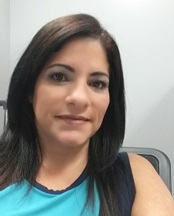
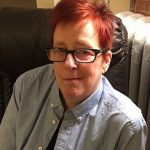
Kate Wolfe, Ph.D.
Assistant Professor, Psychology
Behavioral & Social Sciences Dept.Chair
Educational Technology & Leadership Council (ETLC)
Co-Chair Hostos Online Learning Assessment (HOLA) Committee
Faculty Liaison to Education Technology
Hostos Community College of the City University of New York (CUNY)
Kate Wolfe earned her Ph.D. in Social Psychology at the University of Houston. She is an Assistant Professor of Psychology in the Behavioral and Social Sciences Department at Hostos Community College, CUNY. She is a social psychologist with research interests in quantitative reasoning and quantitative literacy among urban community college students, student perceptions of online learning, using iPads in teaching, linking general psychology and statistics to help reduce the number of remedial math courses taken by students, and urban college student attitudes toward sexual minorities. Regarding quantitative reasoning, she is interested in student perceptions of their own quantitative literacy and student abilities in performing QR tasks such as analyzing pie charts. She co-chairs the Hostos Online Learning Initiative and is chair of the Educational Technology and Leadership Council. This project resulted in numerous conference presentations as well as an article in the Hispanic Educational Technology Services Online Journal in Spring 2016, Hostos Online Learning Assessment: A Survey of Student Perceptions. In 2014-2015 she was a Visiting Scholar at Teachers College, Columbia University as Fellow of the Metropolitan Colleges Institute for Teaching Improvement, a program that focused on the nature of a liberal education at urban colleges. She is beginning the research on attitudes of students in a Hispanic-serving institution toward others based on gender identity or sexual orientation with particular attention on allied health students.
Contact info: Address: Hostos Community College, 500 Grand Concourse B-346, Bronx, NY 10451 Phone: 718-518-6894 Email:KWOLFE@hostos.cuny.edu


 Author: Dr. Annecy Baéz
 Author 2: Víctor Rodríguez
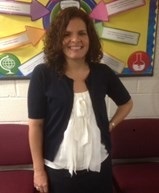 Author 3: Cynthia Suárez-Espinal
 Author: Dr. Rolando García
 Author 2: Dr. Lilliam Martínez
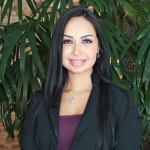 Author: Dr. Janet Martínez
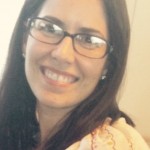 Author: Prof. Elsa Pinto López
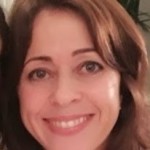 Author 2: Dr. Brenda Toro Enríquez
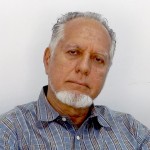 Author 3: Dr. Juan Meléndez Alicea
 Author: Dr. Aida R. Ocasio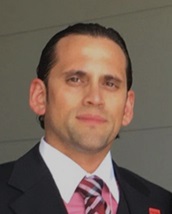
 Kate Wolfe, Ph.D.