Associate Professor in the Education Department
Coordinator of the Early-Childhood Education Program
Hostos Community College
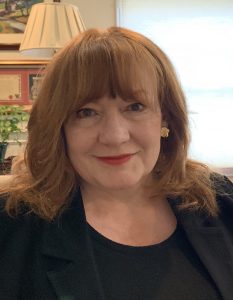
Dr. Jacqueline M. DiSanto area of expertise include curriculum, administration and supervision, online learning, and open-educational resources. She has served as school administrator for pre-school through grade 12. Dr. DiSanto is a founding member and former chair of the Peer Observation Improvement Network for Teaching (POINT); she serves on the Instructional Evaluation and Hostos Online Learning Assessment committees. Her most recent publications focused on student perceptions of online learning and on a college-wide assessment initiative that addressed measuring skills development through general-education competencies and program-learning outcomes. She is the vice-chair of the board of trustees of the New York City Montessori Charter School.
Associate professor
Biological Sciences Department
Bronx Community College- CUNY
Seher have taught a wide range of courses including Anatomy and Physiology I and II, Medical Terminology, Introduction to Behavioral Neuroscience, Microbiology and General Biology for more than in the 22 years. She has received a Presidential Grant, a Teaching with Technology Grant and a PSC-CUNY Grant. Therefore, developed activities to improve student learning through technology and problem based learning activities. She has also developed and taught pre-A&P workshops, and A&P workshops before the final exams along with my colleagues. In addition, Seher Atamturktur has co-designed an interdisciplinary Behavioral Neuroscience course and co-organized Biology Symposium Series.
Contact info: Address: 2155 University Avenue, Meister Hall 508, Bronx, New York 10453 Email:Seher.atamturktur@bcc.cuny.edu Phone Office: 718 289 5516
Seher Atamturktur Associate professor
Biological Sciences Department
Bronx Community College- CUNY
Seher have taught a wide range of courses including Anatomy and Physiology I and II, Medical Terminology, Introduction to Behavioral Neuroscience, Microbiology and General Biology for more than in the 22 years. She has received a Presidential Grant, a Teaching with Technology Grant and a PSC-CUNY Grant. Therefore, developed activities to improve student learning through technology and problem based learning activities. She has also developed and taught pre-A&P workshops, and A&P workshops before the final exams along with my colleagues. In addition, Seher Atamturktur has co-designed an interdisciplinary Behavioral Neuroscience course and co-organized Biology Symposium Series.
Contact info: Address: 2155 University Avenue, Meister Hall 508, Bronx, New York 10453 Email:Seher.atamturktur@bcc.cuny.eduPhone Office: 718 289 5516
Dr. Sacha M. Ruiz Rodríguez
Associate Dean of Academic Affairs
Assistant Professor
Inter-American University of Puerto Rico, Aguadilla Campus
Dr. Sacha M. Ruiz Rodríguez achieved her Bachelor’s Degree in Teaching in Physical Education from the Mayagüez University Campus (RUM), of the University of Puerto Rico in 2003. In 2007, completed a Master’s Degree in School Administration and Supervision at the Pontificia Universidad Católica de Puerto Rico (PUCPR), Mayagüez Campus. Started doctoral studies in Education in Curriculum and Teaching in the PUCPR, Ponce Campus (2001-2017) earning a degree as Doctor of Education. During the last 11 and a half years until present, she has been working for the Inter-American University of Puerto Rico as: Deputy Director of the Federal TRANSER Program, and Director of Development and Students. Currently Dr. Ruiz is the Associate Dean of Academic Affairs, and Assistant Professor in the Inter-American University of Puerto Rico, Aguadilla Campus.
Author: Dr. Dickens Saint Hilaire
Assistant Professor
Bronx Community College
Department of Chemistry and Chemical Technology
Dr. Dickens Saint Hilaire is an Assistant Professor in the Chemistry and Chemical Technology Department at Bronx Community College of City University of New York. His research area is Greenhouse Gas Monitoring, Brown Grease Pyrolysis Mechanism and Soil Analysis. He is also currently engaged in pedagogical research projects focused on the impact of accelerated workshops/courses on students’ retention and graduation as well as the integration of technology in Science, Technology, Engineering, and Mathematics (STEM) courses.
Author: Dr. Yasmin Edwards
Assistant Professor
Bronx Community College
Department of Biological Sciences
Dr. Yasmin Edwards is an Assistant Professor in the Department of Biological Sciences at Bronx Community College. Her research focus is DNA Repair Systems. Her most recent article “An Msh3 ATPase domain mutation has no effect on DNA Mismatch Repair, published by BioMed Central Research Notes in November 2017 reveals the limited effect of the protein on DNA Mismatch Repair. She is also currently engaged in pedagogical research projects focused on the impact of accelerated workshops/courses on students’ long-term performance as well as the effective use of technology to enhance student comprehension in undergraduate science courses. Dr. Edwards is the program coordinator for the Biotechnology Program at Bronx Community College, a student research mentor and Biology Club faculty advisor.
Author:Dr. Nicolas Anuku
Associate Professor
Bronx Community College
Department of Chemistry and Chemical Technology
Dr. Nicolas Anuku obtained his doctorate from the Ecole Nationale Superieure de Chimie de Toulouse in 1995 (France). He worked on the chemical valorization of agricultural raw materials. Moreover, he was a Research Associate in material science at Princeton University, Princeton, New Jersey (2010 -2017), having worked on the synthesis of nanoparticles and the utilization of these nanoparticles as drug delivery systems in breast cancer (early detection and treatment). Dr. Anuku is deeply interested in nanotechnology and green chemistry as well as the valorization of waste. Currently he teaches chemistry at Bronx Community College and engage in pedagogy practices in each of his classes. This pedagogy contributes in distilling the right chemical information to non-conventional students.
Author: Nana Kofi Karikari
Chemistry Professor
Bronx Community College
Karikari is a Biomedical scientist with interest in biomarker discovery and proteomics using Mass Spectrometry applications. He is currently a professor at Bronx Community College, a lecturer in college Chemistry. His work focus is on improving and implementing science-related educational skills in students.
Author:Dr. Angel Rivera Serrano Colegio Universitario de San Juan
Dr. Rivera Serrano has 20 years of experience as a university professor teaching courses in educational technology and computer programming at the undergraduate and graduate level from several higher education institutions in Puerto Rico. He has collaborated on multiple occasions as an evaluator of the Higher Education Council Puerto Rico (CESPR) and offers professional training workshops to educators of the public education system of Puerto Rico. He holds a master’s degree in information systems and a doctorate in educational administration. He currently serves as coordinator of the department of Business Administration of the University College of San Juan.
Author: Dr. Karin Lundberg
Associate Professor
Chair of the Department of Language and Cognition
Hostos Community College of the City University of New York (CUNY)
Dr. Lundberg is an Associate Professor and Chair of the Department of Language and Cognition at Hostos Community College of the City University of New York (CUNY). She holds an M.A. in English and German Studies and Linguistics from Karl Ruprecht University Heidelberg, Germany and a Ph.D. in Germanic Languages and Literatures from New York University, New York, USA. She has been a full time faculty member at Hostos Community College since fall 2006 where she teaches Academic ESL and Linguistics.
Author: Catherine (Kate) Lyons
Associate Professor
Hostos Community College of the City University of New York (CUNY).
Kate Lyons is an Associate Professor at Hostos Community College of the City University of New York (CUNY). She is Head of Reference in the Library and also faculty liaison to the Office of Educational Technology. She holds an M.S. in Library and Information Science from The University of Illinois at Urbana-Champaign and an M.S. in Management from the Wagner School of Public Service at New York University. Her B.A. is from Grinnell College.
Associate Professor
Hostos Community College of the City University of New York (CUNY).
Kate Lyons is an Associate Professor at Hostos Community College of the City University of New York (CUNY). She is Head of Reference in the Library and also faculty liaison to the Office of Educational Technology. She holds an M.S. in Library and Information Science from The University of Illinois at Urbana-Champaign and an M.S. in Management from the Wagner School of Public Service at New York University. Her B.A. is from Grinnell College.
Associate Professor
Chair of the Department of Language and Cognition
Hostos Community College of the City University of New York (CUNY)
Dr. Lundberg is an Associate Professor and Chair of the Department of Language and Cognition at Hostos Community College of the City University of New York (CUNY). She holds an M.A. in English and German Studies and Linguistics from Karl Ruprecht University Heidelberg, Germany and a Ph.D. in Germanic Languages and Literatures from New York University, New York, USA. She has been a full time faculty member at Hostos Community College since fall 2006 where she teaches Academic ESL and Linguistics.
Associate Dean of Academic Affairs
Assistant Professor
Inter-American University of Puerto Rico, Aguadilla Campus
Dr. Sacha M. Ruiz Rodríguez achieved her Bachelor’s Degree in Teaching in Physical Education from the Mayagüez University Campus (RUM), of the University of Puerto Rico in 2003. In 2007, completed a Master’s Degree in School Administration and Supervision at the Pontificia Universidad Católica de Puerto Rico (PUCPR), Mayagüez Campus. Started doctoral studies in Education in Curriculum and Teaching in the PUCPR, Ponce Campus (2001-2017) earning a degree as Doctor of Education. During the last 11 and a half years until present, she has been working for the Inter-American University of Puerto Rico as: Deputy Director of the Federal TRANSER Program, and Director of Development and Students. Currently Dr. Ruiz is the Associate Dean of Academic Affairs, and Assistant Professor in the Inter-American University of Puerto Rico, Aguadilla Campus.
Associate Professor
Bronx Community College
Department of Chemistry and Chemical Technology
Dr. Nicolas Anuku obtained his doctorate from the Ecole Nationale Superieure de Chimie de Toulouse in 1995 (France). He worked on the chemical valorization of agricultural raw materials. Moreover, he was a Research Associate in material science at Princeton University, Princeton, New Jersey (2010 -2017), having worked on the synthesis of nanoparticles and the utilization of these nanoparticles as drug delivery systems in breast cancer (early detection and treatment). Dr. Anuku is deeply interested in nanotechnology and green chemistry as well as the valorization of waste. Currently he teaches chemistry at Bronx Community College and engage in pedagogy practices in each of his classes. This pedagogy contributes in distilling the right chemical information to non-conventional students.
Coordinator
Business Administration Department Colegio Universitario de San Juan
Dr. Rivera has 20 years of experience as a university professor teaching courses in educational technology and computer programming at the undergraduate and graduate level from several higher education institutions in Puerto Rico. He has collaborated on multiple occasions as an evaluator of the Higher Education Council Puerto Rico (CESPR) and offers professional training workshops to educators of the public education system of Puerto Rico. He holds a master’s degree in information systems and a doctorate in educational administration. He currently serves as coordinator of the department of Business Administration of the University College of San Juan.
Karikari is a Biomedical scientist with interest in biomarker discovery and proteomics using Mass Spectrometry applications. He is currently a professor at Bronx Community College, a lecturer in college Chemistry. His work focus is on improving and implementing science-related educational skills in students.
Assistant Professor Department of Biological Sciences Bronx Community College, CUNY
Dr. Yasmin Edwards is an Assistant Professor in the Department of Biological Sciences at Bronx Community College. Her research focus is DNA Repair Systems. Her most recent article “An Msh3 ATPase domain mutation has no effect on DNA Mismatch Repair, published by BioMed Central Research Notes in November 2017 reveals the limited effect of the protein on DNA Mismatch Repair. She is also currently engaged in pedagogical research projects focused on the impact of accelerated workshops/courses on students’ long-term performance as well as the effective use of technology to enhance student comprehension in undergraduate science courses. Dr. Edwards is the program coordinator for the Biotechnology Program at Bronx Community College, a student research mentor and Biology Club faculty advisor.
Dr. Dickens Saint Hilaire is an Assistant Professor in the Chemistry and Chemical Technology Department at Bronx Community College of City University of New York. His research area is Greenhouse Gas Monitoring, Brown Grease Pyrolysis Mechanism and Soil Analysis. He is also currently engaged in pedagogical research projects focused on the impact of accelerated workshops/courses on students’ retention and graduation as well as the integration of technology in Science, Technology, Engineering, and Mathematics (STEM) courses.
By: Stacia Reader, and Seher Atamturktur, Bronx Community College (BCC), City University of New York
Author Note: Stacia Reader, Department of Health Physical Education and Recreation, BCC; Seher Atamturktur, Department of Biological Sciences, BCC. This assessment project was supported by a BCC Presidential Grant. Correspondence concerning this article should be addressed to Stacia Reader, Department of Health Physical Education and Recreation, Bronx Community College, Loew Hall, Room 308, 2155 University Avenue, Bronx, NY 10453. Contact: stacia.reader@bcc.cuny.edu
Abstract
Many students enter community college with unclear goals or little sense of how to link academic and career plans. We aimed to guide students’ decisions about careers by providing career forums in the health, STEM and business fields where professionals spoke about their academic and career paths and follow-up academic forums where staff provided information about their department’s services at Bronx Community College (BCC). In total, 163 students attended the health career forum and 205 students attend the STEM and business career forum. A majority of students who completed the post surveys reported the career forums were extremely or very helpful to their future academic plans and most reported they felt very much or somewhat more knowledgeable about their career path after attending the event. Almost half (49%) of those who completed the post survey for the heath career forum indicated they would consider an alternative career path. Most students reported the academic forums were helpful to their future academic plans. These results suggest that hosting career and academic forums may help students identify and enter programs of study that are appropriate for their goals and interests early in their academic career thereby helping to improve completion and retention rates.
En la presente investigación se buscó determinar la efectividad de las modalidades de enseñanza presencial y a distancia en el aprovechamiento académico de estudiantes del componente general del programa de educación de una universidad privada de Puerto Rico. El diseño de la misma fue cuasi experimental. El marco teórico que sustentó la investigación fue la Teoría basada en la autonomía y la independencia del estudiante de Wedemeyer (1977) y la Teoría Constructivista de Piaget del 1978. Se utilizaron dos instrumentos, uno de cada materia: matemática y español, diseñado y construido por los miembros de la facultad de las materias correspondientes. La muestra de este estudio fue por disponibilidad y constó de 36 estudiantes matriculados tanto en modalidad presencial como a distancia. Los datos obtenidos se sometieron al análisis estadístico y se utilizó el programa Statistical Package for Social Sciences (SPSS). Para el nivel de confiabilidad se utilizó el Alpha. Para determinar si existe diferencia significativa entre modalidades de enseñanza, se utilizó prueba t para muestras independientes. Los hallazgos y conclusiones van dirigidos a la creación de una teoría dirigida a la formación del estudiante la cual tendrá simultáneamente un enfoque individualista y un enfoque colectivo de participación activa.
ABSTRACT
This research aims to determine the effectiveness of on-site and online modes of delivery on the academic achievement of students enrolled in the general component of the education program of a private university in Puerto Rico. A quasi-experimental design was used, and the Wedemeyer’s Theory of Independent Study (1977) and Piaget’s Constructivist Theory (1978) provided the framework for the research. Two instruments, prepared by the faculty of the corresponding subject matters, math and Spanish, were used to obtain the data. The sample for this study was by availability and consisted of 36 students in both groups, on-site and online. The data obtained was analyzed using the Statistical Package for Social Sciences (SPSS). T-Test for independent samples was applied to determine the level of significance. The findings and conclusions are aimed at creatives of a theory that focus on one formation of student using simultaneously an individualistic and a collective approach.
By: Dickens St. Hilaire, Yasmin Edwards, Anuku Nicolas, and Nana K. Karikari; Department of Chemistry and Chemical Technology, Bronx Community College of the City University of New York.
2155 University Avenue, Bronx, New York, 11453, Bronx, New York, 10453
Introductory or gateway science courses often prove challenging for many community college students. At a Hispanic Serving Community College like Bronx Community College (BCC), many students abandon majors in science because they are unable to successfully complete the introductory science course requirements for their majors. To address this challenge we implemented an Accelerated Sequence Program (ASP). This paper evaluates the merits and functionality of the intensive ASP platform, which entailed combining the Chemistry 02 (CHM02) and chemistry17 (CHM17) courses offered by the Chemistry Department of Bronx Community College (BCC) in an accelerated one-semester sequence. This paper enumerates the program’s impact on student performance and retention. It also indicates that the students enrolled in the remedial CHM02 ASP sections achieved the greatest benefit from the introduction of ASP to the Chemistry Department of BCC.
Keywords: Hispanic Serving Community College, Accelerated Sequence Program, General Chemistry, Remedial Chemistry, Supplemental Instruction Workshops, Peer Instructors
Las nuevas tecnologías permiten ahora formas no tradicionales de educación. Con ello se eliminan barreras de tiempo y espacio que desalientan y entorpecen a muchos empleados en su desarrollo profesional. Por otro lado, existe una tendencia a visualizar la educación a distancia como un mero producto de la comercialización de la educación, y el proceso evaluativo se vuelve una de las áreas más criticadas por parte de amplios sectores académicos (Noble, 2001). Las organizaciones que proponen iniciar el uso de las técnicas de educación a distancia o en línea para desarrollar a su personal no deben perder de perspectiva que los seres humanos aprenden de diversas formas y que en dicho proceso influyen una diversidad de factores. Esta investigación se sustenta sobre la base teórica conceptual la teoría de difusión de la innovación según Everett Rogers (1995). El estudioso Everett Rogers introdujo la teoría de la difusión en el contexto del estudio y la práctica del desarrollo. Dicho estudioso destacó la importancia de la difusión como un proceso en el cual las personas adoptan un modo de vida más desarrollado técnicamente y más rápidamente cambiante, a esto se le denomina innovación. Se trata de una teoría ampliamente aplicada en el análisis de la adopción de la Internet y experiencias a distancia puesto que alude a la ventaja relativa obtenida por la adopción, su complejidad y compatibilidad con los sistemas de valores previamente existentes y la posibilidad de probar la tecnología antes de adoptarla definitivamente. Estos factores resultaron de importancia para enmarcar el pensamiento de que los cambios suceden cuando las personas como sistema social, para efectos de esta investigación se trata de los docentes, adoptan nuevas ideas y crean conciencia acerca de la aplicación de herramientas y métodos modernos o tecnológicos.


 Associate professor
 Dr. Sacha M. Ruiz Rodríguez
 Author: Dr. Dickens Saint Hilaire
 Author: Dr. Yasmin Edwards
 Author: Dr. Nicolas Anuku
 Author: Nana Kofi Karikari
 Author:
  Author: Dr. Karin Lundberg
 Author: Catherine (Kate) Lyons