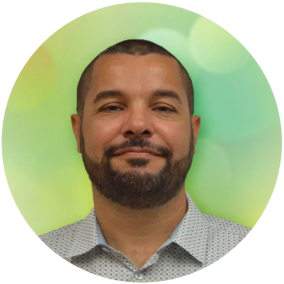
Carlos Crespo Santiago is the Executive Director for COBIMET, inc. and has more than 20 years work experience in higher education institutions in both public and private sector, pharmaceutical industry and government. Has experience in project management, personnel management and budget administration.
Assistant Vice President
Distance Education
InterAmerican University of Puerto Rico
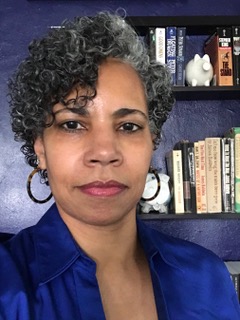
Dr. Omayra Caraballo Pagán is an Assistant Vice President of Distance Education at the InterAmerican University of Puerto Rico, a nonprofit higher education institution, and has a high recognition for its distance academic offering.
Doctor Caraballo has had an outstanding career in professional service. She has two master’s degrees, one in Human Resources and one in Information Systems, and a doctoral degree in Education in Instructional Technology and Distance Education.
During the last decade, she served as Associate Dean of Academic Affairs, in charge of the distance education management of the Ponce Campus. There she had under his direction two academic departments, one postgraduate and one graduated, with 30 full-time and over 80 part-time teachers and a team of fifteen other collaborators, including curricular, content, production, and technical support for various specialized functions. This transdisciplinary team has articulated the design of over 350 online courses and served annually to a student population of over 3,500 students taking courses in distance mode in that academic unit.
Among his most outstanding achievements is the design and development of an Associate Deanship of Academic Affairs, the Center for Innovation and Creativity in Education, the integration of a team for the online students’ services and the development of a Center of Clinical Simulation Scenarios in the Department of Health Sciences and the Project of Academic Enrichment for the Online Faculty. Through this project, continuous training of the faculty in the aspects associated with distance education has been achieved, namely the acquisition of technological, research, pedagogical, social, and academic leadership skills.
Doctor Caraballo has been characterized by promoting a critical, adaptive, and entrepreneurial leadership model for academic management, as well as promoting the quality, effectiveness, and integrity of distance education nationally and internationally. Several of its innovative initiatives and projects have won recognition from external organizations.
Due to her administrative experience in the field of distance education, her services have been requested to participate as an evaluator in licensing and program authorization of private universities in Puerto Rico. In addition, she has given lectures and workshops in various areas of knowledge: companies, computers, distance education, academic and administrative management, national and international.
Full Professor
School of Education
Northcentral University
Dr. Michael Shriner is currently a full professor in the School of Education at Northcentral University. Prior to working at Northcentral University, Dr. Shriner was a study director at Westat in Rockville, Maryland, where he worked on the National Children’s Study, which was administered by the Eunice Kennedy Shriver National Institute of Child Health and Human Development, and on the national evaluation of the developmental disabilities programs administered under the Developmental Disabilities Assistance and Bill of Rights Act of 2000. Dr. Shriner has served as a program evaluator and statistical consultant for various grants administered by the U.S. Department of Education. He is an author of numerous research articles and a coauthor of the textbooks Supporting Children’s Socialization: A Developmental Approach, Essential of Lifespan Development: A Topical Approach, and Lifespan 360: Christian Perspectives on Human Development.
Assistant Professor
Bronx Community College
Department of Education & Academic Literacy
Dr. Hernen is currently an Assistant Professor at Bronx Community College in the Department of Education and Academic Literacy. She has spent her tenure at Bronx Community College designing a hybrid developmental reading course and working with students on academic probation. Most recently, Dr. Hernen created a mentoring course for aspiring educators to work with students placed on academic probation. Dr. Hernen is also a student teacher supervisor and seminar instructor where she works with New York City’s future teachers. Prior to her work at Bronx Community College, Dr. Hernen was an Early College Academy Instructor at York College in New York City. Here she assisted high school seniors in preparing them for the college transition. Aside from her instructional work, Dr. Hernen is the author of many research journals focusing on English Language Learners, hybrid reading, first-generation college students and the impact of the No Child Left Behind Act.
Este estudio examinó las prácticas de assessment y evaluación en cursos que se ofrecen en la modalidad en línea en una institución de educación postsecundaria. El propósito de esta fue determinar si los principios que dirigen el assessment en educación a distancia son utilizados por los diseñadores y profesores de cursos que se ofrecen en esta modalidad. Para esta investigación mixta, de alcance exploratorio descriptivo, se utilizaron fuentes de información primarias y secundarias. Las fuentes primarias fueron las grabaciones y resúmenes de las entrevistas a profesores que ofrecían cursos en línea, y el proceso de observación de los cursos incluidos en el estudio. En la observación se pudo analizar y cuantificar el uso de herramientas de evaluación y assessment, en las categorías de tradicional y no tradicional y el tipo de técnicas de assessment utilizadas por los profesores, así como la cantidad de estas. Las fuentes secundarias fueron la documentación recopilada durante el estudio.
En conclusión, la institución bajo estudio tiene el potencial de convertirse en líder en cuanto a los procesos de assessment y evaluación de programas a distancia. Para el logro de esto, la Institución deberá fundamentar la calidad de sus programas en línea en un modelo basado en el logro del aprendizaje. Una contribución de este estudio es la presentación a la Institución de un modelo de assessment de programas en línea, basado en las mejores prácticas de educación a distancia. El modelo podrá ser utilizado por los diseñadores de cursos en línea y el personal a cargo de esta gestión.
Identificadores
“assessment”, “cursos en línea”, “educación a distancia”, “programas a distancia”
El ser humano es un caminante obligado inmerso en una sociedad cambiante; cambia el clima, cambian las ciudades, cambian las organizaciones, cambian las personas, cambia la mentalidad, cambian las ideas, cambia la cultura, cambia la educación, cambia el lenguaje, cambia el discurso, cambia la predicación, cambia la tecnología y cambia la vida.
Hoy, el ser humano está inmerso en una sociedad repentinamente trastornada, forzada a un cambio abrupto por causa de un virus*.
*En los estudios de microbiología se aprende que un virus no es un microorganismo, sino un complejo bioquímico formado por una capsula de proteína que encierra en su núcleo un genoma de un ácido nucleico (ARN o ADN) y depende de las células vivas de otros organismos para replicarse, como bien lo confirma la Dra. Sanchari Sinha Dutta, Ph.D. (2018).
Es asombroso que un nanométrico e inerte complejo químico, ha producido un cambio en el estilo de vida del ser humano en todo el mundo. Como bien lo documenta Riaño (2020), otros tipos de virus identificados en generaciones anteriores hicieron lo propio durante los siglos VI, XIV y XIX. La peste bubónica que en Europa borró al 50% de la población, solo entre 1346 y 1353, afectó directamente a Martin Lutero hacia el 1527, cambiándole radicalmente su agitado oficio como escritor, como estudioso de las Sagradas Escrituras, y como el arquitecto de la reforma protestante de la iglesia (Riaño-Bite, 2020).
Este es solo un hecho en el amplio contexto histórico, pero en el presente, la humanidad tiene un enemigo común, que, de una parte, está provocando efectos devastadores, pero, por el otro, algo bueno y constructivo.
Based on the response for the need to engage students in developmental reading, the purpose of this study was to examine whether a hybrid method of instruction has an impact on student reading achievement. To measure reading achievement, quantitative data in the form of student grades on end of the semester exit exams was collected. Data was analyzed using dependent-samples paired t-test and the results indicated a significant impact on reading achievement: t=.360, p=0.011. Future research is needed to determine the impact of the hybrid method of instruction on developmental reading students in differing socioeconomic backgrounds and geographic locations.
Education emerged out of the necessity different countries had for better-prepared workers. Well-educated citizens are responsible for taking the best measures for society’s social, financial, and political development (Claudio, 2002). Nevertheless, higher education institutions confront the problem of retaining students and helping them finish their academic degrees. This led me to research the role educational institutions have in retaining students and what should professors do at Bronx Community College (BCC) and other institutions.
Objectives:
Present academic offering factors related to the pedagogic process and social demands which can affect the retention of students in universities and Bronx Community College.
Present strategies that can help with social demands and academic offering factors which influence the retention of students in universities and Bronx Community College.
Promote strategies recommended by some retention models (Tinto, 1975, 1987; Bean and Metzner, 1986; Pascarella, 1991) and research showing the effectiveness of those strategies in retaining university students.
All the suggested strategies in this article can be used as reference so higher education institutions can fulfil their commitment to the teaching process and to society and students do not abandon their studies. These practices can be applied at colleges, universities, or they may be substituted according to the educational policies of different countries. However, while higher education institutions have worked hard to retain more students through different strategies, there are always students who do not finish their studies.
By: Carlos Crespo, Executive Director, COBIMET, Inc.
Abstract
This research article will discuss a collaboration strategy used between eight postsecondary institutions in Puerto Rico which are part of the library consortia COBIMET. COBIMET is a non-profit organization that works collaboratively with its members to improve virtual library services and information skills in the digital era. The development of collaboration strategies for information sharing through interlibrary loans (ILL) services have become an important service to reduce the gap of information needed by researchers or scholars. These institutions implemented an automated online interlibrary loan system that was integrated to their electronic resources discovery system. The aim of this collaborative agreement was to reduce request time and to provide access to more information resources in a cost-effective manner. The article will present the rationale on implementing an automated ILL Request Process and project experiences.
Resumen: Este artículo describe el proceso de traducción y validación del cuestionario “Student Expectations of Online Learning Survey” (SEOLS), así como su administración a todo el estudiantado sub-graduado (ie. pregrado) matriculado totalmente en línea en la Universidad Interamericana de Puerto Rico, Recinto de Ponce (UIPR-Ponce). Esta investigación cuantitativa-descriptiva fue realizada durante el semestre de primavera de 2017 y contó con una muestra aleatoria de 225 participantes, que completaron el cuestionario SEOLS en línea. Los hallazgos revelan que el estudiantado en línea tiene un alto dominio de la tecnología y del manejo del sistema o la plataforma educativa que se utiliza para la entrega o “course delivery”. Además, tiene altas expectativas sobre todo lo relacionado con la navegación en los cursos en línea y el profesorado que ofrecen estos cursos. Las dimensiones relacionadas con el contenido de los cursos y la interacción social en los cursos en línea recibieron las puntuaciones más bajas. Se concluye que, para esta población universitaria, SEOLS es un instrumento válido y confiable. Además, que los alumnos totalmente a distancia poseen niveles de expectativas variadas para cada una de las dimensiones descritas en SEOLS. Los resultados de esta investigación pueden ser de utilidad en el diseño y revisión de cursos, así como en la capacitación del profesorado que ofrece cursos en línea.
Palabras clave: educación en línea, formación a distancia, aprendizaje en línea.
Abstract: This article describes the process of translation and validation of the “Student Expectations of Online Learning Survey” questionnaire (SEOLS), as well as its administration to all fully online undergraduate students at the Inter-American University of Puerto Rico, Ponce Campus (UIPR-Ponce). This quantitative-descriptive research was conducted during the spring semester of 2017 with a random sample of 225 participants, who completed online SEOLS questionnaire. The findings reveal that the online student body has a high mastery of the technology and the management of the system or platform used for the course delivery. In addition, it has high expectations about everything related to navigation in the online courses and teaching staff offered by these courses. The dimensions related to the content of the courses and the social interaction in the online courses received the lowest scores. In conclusion, for this university population, SEOLS is a valid and reliable instrument. In addition, that distance education students have varied levels of expectations for each of the dimensions described in SEOLS. The results of this research can be useful in the design and review of courses, as well as in the training of teachers who offer online courses.
The correct use of units of measure is a critical and fundamental skill that is often taken for granted. The fact that units are taught in high school leads to the expectation that university freshmen master these skills. Unfortunately, faculty often observe that students struggle with units. Although the literature is limited on the nature and extent of students’ struggles with units, it is shown that all of it, without exception, points to a pervasive problem in STEM programs. This paper contributes to the literature by exploring the evolution in the performance of N=21 senior mechanical engineering students enrolled during the Fall 2019 semester in a 3-credit-hour, required course that prepares them for the NCEES Fundamentals of Engineering (FE) Exam. Students were given a unit-conversion quiz at the beginning each class session. It was corrected on the spot, with a score of either 1 or 0, followed by a discussion of the quiz. A score of 1 required a perfect solution. The performance on each quiz guided the decision on the content of future quizzes. The results show that 15 quizzes were required to get 100% of the students to push through their difficulties and achieve expertise. The paper includes the content of the quizzes, the solutions, the aggregated results for each quiz, and the nature of the mistakes. It also includes an algorithm to conduct unit conversions and a visualization scheme to use tables of unit conversions and tables of metric prefixes that were developed during the project. These greatly assisted students in overcoming their difficulties. The experiment was repeated the following semester (Spring 2020, N=27) to test the effectiveness of an algorithm and visualization scheme developed by the author during the Fall 2019 semester. The time to achieve expertise was reduced to one third (5 quizzes vs 15 for the original group), thus confirming its merit. Part of the discussion section focuses on the benefit of the Scholarship of Teaching and Learning (SoTL) movement, of which this paper is an example, and its use in the ABET-required processes of outcomes assessment and continuous improvement. The paper also includes suggestions for further research.
By: Prof. Rob McAlear,
Assistant Professor, English Department, Queensborough Community College of the City University of New York (CUNY)
Abstract
This article shares the design considerations, implications, and data analysis of an MLA citation online module created using Softchalk e-learning software. Based on research on how to best meet the needs of the diverse, multilingual, and English language learner students at the author’s college, key to the module’s design was using a “flipped” approach, ease of use for students as well as faculty, multiple types of review activities, and a positive rhetorical frame of participation in a scholarly community. Statistical analysis of data collected showed the module to be effective, especially for students who knew little about MLA citation to begin with and implies that such modules may help to close gaps in student knowledge created by cultural and linguistic bias.
Introduction
In the digital age, information literacy has become crucial to both academic and workplace success (Rockman, 2003). Information literacy has been found to be positively correlated with behaviors associated with academic success such as problem solving, collaboration, and thinking critically (Gratch-Lindauer, 2007), and information literacy instruction is correlated with higher student retention and GPA (Blake et al., 2017). Moreover, research has also shown that even though information literacy can look quite different in the workplace than the classroom, employers value employees with information literacy skills (Conley & Gil, 2011; Sokoloff, 2012). In fact, information literacy is such a vital skill for students’ academic and workplace success that some researchers have called it a “new liberal art” (Shapiro & Hughes, 1996).
Author Note: Sherese Mitchell, Ed.D is associate professor in Education Department at Hostos Community College, The City University of New York. She has no known conflict of interest to disclose. Correspondence concerning this article should be addressed to Sherese Mitchell, Ed.D. at smitchell@hostos.cuny.edu
The Evolution of Lesson Plans in a Hybrid Course: Flipping the Classroom and Engaging Students Through iPads and YouTube Videos
Abstract
Instruction must include rigorous engagement in an online course. The increased popularity and use of social media tools have compelled instructors to incorporate them into instruction and learning. Due to many students using these tools, and, more specifically, YouTube, to interact and communicate with their friends, it can be an efficient way to unite students and instructors in higher education. This paper describes the design and implementation of lesson plans utilizing ipads, YouTube and peer discussions. Ultimately it is up to the professor to gauge, monitor and adjust instruction accordingly for the benefit of the students. Students can benefit from the strategy by having support throughout the process.
Ronette A. Shaw, MSN, FNP, R.N. (First Author) Assistant Professor
Nursing Program, Allied Health Department
Hostos Community College of the City University of New York
Ronette Shaw is an Assistant Professor at Hostos Community College of the City University of New York (CUNY). As a member of the Allied Health department she is a faculty in the nursing department and appointed liaison to the Office of Educational Technology. Educational background includes an MSN from the College of New Rochelle where she also obtained her current license as a Family Nurse Practitioner. Currently she is teaching in the licensed practical nursing (LPN) program at Hostos Community College and enjoys introducing variations to learning into the classroom setting and capture the interest of learners. As a member of Educational Technology, the opportunity to include new and innovative technology in the classroom has been infused into her teaching instruction to meet the needs of the diverse student population as they prepare to enter into professional practice.
Assistant Professor of English
Queensborough Community College
City University of New York
Robin R. Ford (Ph.D. New York University) is an Assistant Professor of English at Queensborough Community College, City University of New York. A queer, black, woman, whose scholarship is both academic and personal, her focuses include the use of graphic genre works to teach critical literacy, intersectionality of race, gender and sexuality, social justice, and critical interrogation of the spaces we occupy. She has presented scholarship on race and space, popular culture, and the creation of identity through literacy at AERA, PAMLA and CCCC conferences. She has been published in Salon.com, the Kenyon Review, The Conversant, and appeared on NPR’s “On Point, with Tom Ashbrook.” Her work can be found on www.robinrford.wordpress.com.


 Executive Director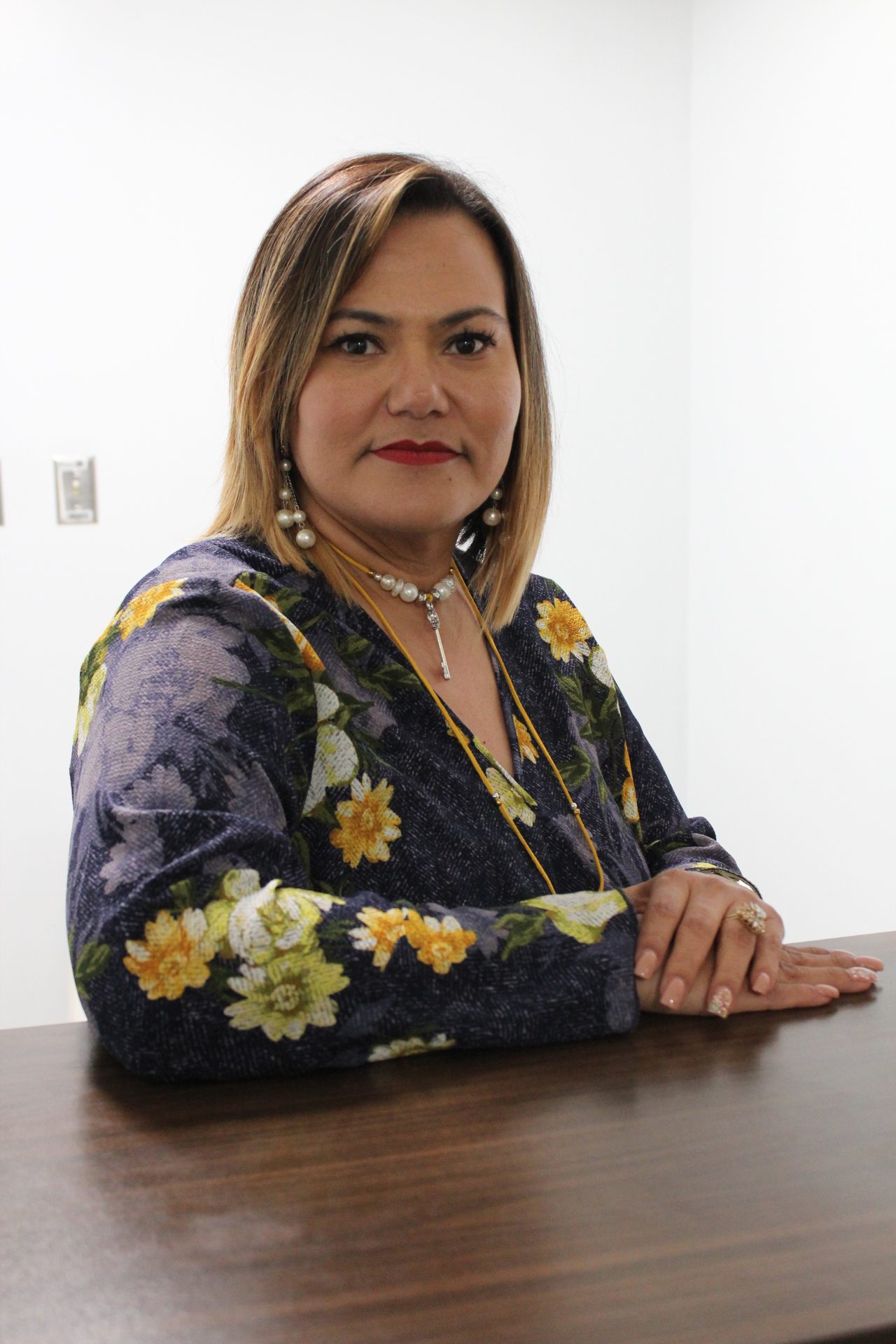

 Assistant Professor