


PDF Article 3 – Nivel de satisfacción de los estudiantes con los servicios académicos presenciales y en línea Final Oct-2021
PDF Article 2 – First Generation Hispanic College Students Oct-2021 Final
PDF Article 1 – Active Learning Approaches to Improve Teachers Research Skills During COVID19 Final Oct-2021
Donna Kessler-Eng, Ph.D.
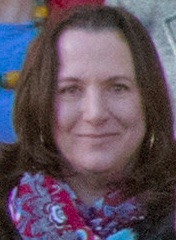
Associate Professor, Department of English
Bronx Community College at City University of New York
Donna Kessler-Eng is an associate professor of English at Bronx Community College (BCC). She is currently BCC’s Strong Start to Finish Resident (English), and is designing co-requisite courses for students with developmental needs in both English and reading. She earned a Ph.D. in English from the CUNY Graduate Center where she specialized in antebellum American literature and nineteenth century American medical and cultural discourse. She teaches developmental writing, composition, and literature and medicine courses. Her research interests include literature and medicine, pedagogy, first-year writing, developmental education reforms and strategies for community college students’ success. She has served as the coordinator of BCC’s Developmental Writing Program, and as the coordinator of BCC’s Tutorial Intervention Program. She was also a member of CUNY’s Developmental Writing Advisory Committee and CUNY’s Writing Discipline Council.
Contact Information:
Email: donna.kessler-eng@bcc.cuny.edu
Phone: 718-289-3004
Swan Kim, Ph.D.
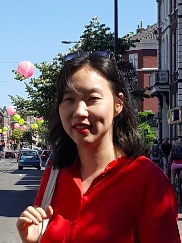
Associate Professor, Department of English
Bronx Community College at City University of New York
Swan Kim is an associate professor of English and Writing Across the Curriculum (WAC) coordinator at Bronx Community College (BCC) at City University of New York (CUNY). She received her PhD in English at University of Virginia specializing in Asian American diaspora. She teaches courses in composition and ethnic American literature. Her research interests include WAC/WID, first-year writing, antiracist pedagogy, diaspora and immigration, race and ethnicity, and Asian American literature and culture. She has been serving as the Diversity, Equity, and Inclusion committee co-chair at the Association for Writing Across the Curriculum (AWAC), the co-leader for the CUNY WAC Professional Development, and a faculty senate and council member at her college.
Contact Information:
Email: swan.kim@bcc.cuny.edu
Phone: 718-239-5745
Prof. Sylvia Maria Ruiz Santiago
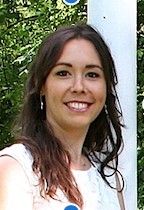
Indiantown Adult Learning Center (IALC)
Martin County School District
Ruiz Santiago is a teacher originally from Spain, with two bachelor’s and a master’s degree in Education. Currently she’s pursuing a Ph.D. in Education and Leadership. She has been teaching for twelve years in privates and public institutions from kindergarten to university levels around the world; in Spain, France, Chile and now the USA. Her expertise is how to teach a foreign language. In the United States, she worked for three years as a French Immersion School teacher and later on as a Spanish professor in College. Right now, she’s teaching ESOL for the District of Martin County.
Contact Information:
Email: srs_86@hotmail.com
Phone: 614-843-2726
Dr. Brenda Lee Morales Gonzáles
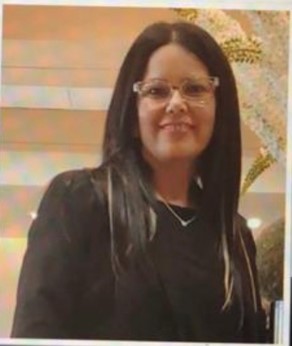
Kaiser University
Brenda Lee Morales holds a Bachelor’s Degree in General Elementary Education from Universidad del Turabo in Puerto Rico. A few years later he completed a Master’s degree in Educational Administration at the same institution. In 2016, she completed a PhD in Educational Leadership at Keiser University where she had already earned a Specialist in Education degree. Finally, in the academic aspect, Dr. Morales holds a Post Doctorate in Business Administration with a concentration in Finance from Walden University. She is currently doing another Post-Doctorate at Walden University in the Human Resources area. In terms of work and professional career, she has 27 years of experience working in the field of education in several positions as a teacher, Curriculum Specialist, Director of Federal Educational Proposals, Academic Dean, among others. He has worked at all levels of the education system in Puerto Rico, from Head Start to High School and at the university level. Eleven years ago, she began as Director of Federal Proposals and Professor of University Institutions and currently serves as Dean of Academic and Student Affairs at Humacao Community College in Puerto Rico, in addition to offering online courses to Humacao Community College in Puerto Rico, in addition to offering online courses to university level at the Master’s and PhD level.
Contact Information:
Email: bmorales@keiseruniversity.edu
Phone: 787-672-7661
Dr. Frances Vázquez Padilla
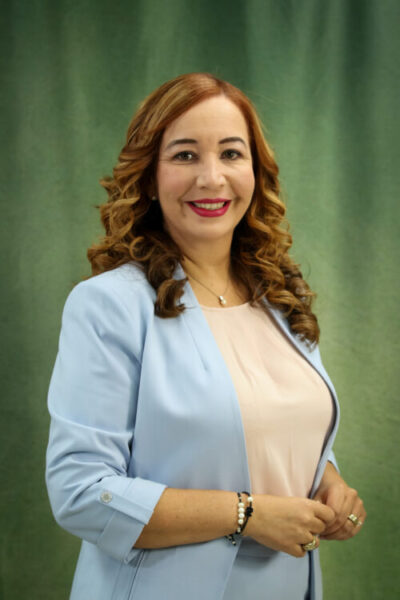
Chancellor
NUC University
Dr. Frances M. Vázquez Padilla holds a Bachelor’s Degree in Nursing, few years later completed a Master’s degree in Advanced Practice in Nursing. In 2020, she completed an Ed. D. in Educational Management and recently she completed a professional certification in Neurolinguistic Programing and Coaching. She is currently doing another certification related to educational neuroscience. She has 14 years of experience working in the field of education in several positions as Faculty, Academic Director, Academic Dean at NUC University. Currently she serves as Chancellor at NUC University, Ponce Campus in Puerto Rico.
Contact Information:
Email: fvazquez@nuc.edu / francesm.vazquez@gmail.com
Phone: 787-213-2101 – 787-840-4474 –Ext. 7009
Twitter: @DraFrancesVazq1
Dra. Yubelkys Montalvo
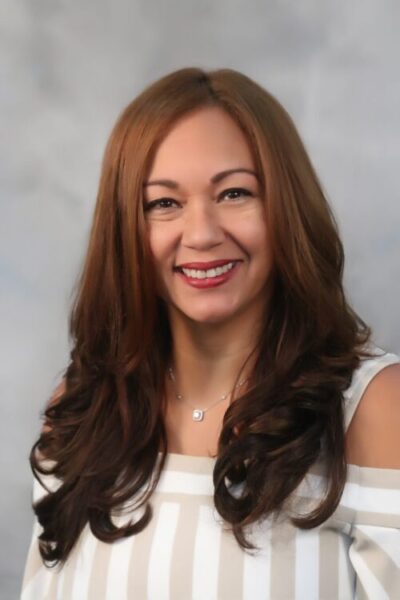
Diretora Ejecutiva
HETS Consortium
La Dra. Yubelkys Montalvo trabaja para el Hispanic Educational Technology Services Consortium (HETS, por sus siglas en inglés) desde el año 1999. Desde que fue designada Directora Ejecutiva en el 2006, su enfoque principal es el crecimiento de la organización y la diversificación de los beneficios para las instituciones miembros del Consorcio. Entre las iniciativas desarrolladas se destacan: la creación de nuevos servicios como la revista arbitrada HETS Online Journal, el programa de Estudiantes Embajadores y la colaboración para proponer nuevas alternativas educativas tecnológicas y compartir las mejores prácticas a través de eventos educativos como el Best Practices Showcase y el Student Leadership Showcase y recientemente, webinars para facultad, administradores y estudiantes. Además, ha coordinado y dirigido numerosos adiestramientos internacionales en universidades de Colombia y México, y ha participado en numerosas conferencias y foros Nacionales e Internacionales. La Dra. Montalvo posee un Bachillerato en Comunicaciones de la Universidad de Puerto Rico, Recinto de Río Piedras, y una Maestría en Relaciones Públicas de la Universidad de Sagrado Corazón. Actualmente, completó su doctorado en el programa: Educación en Liderazgo e Instrucción en la Educación a Distancia de la Universidad Interamericana de PR, Recinto de Ponce.
Contact information:
Email: yublekys_montalvo@inter.edu
Phone: (787) 616-3201
Dr. Diana M. Valle-Riestra
Project Director
Title V PPOHA Graduate Grant
Albizu University-Miami Campus
Dr. Diana M. Valle-Riestra is the Project Director of the Title V PPOHA Graduate grant and a faculty member in the Speech & Language Pathology graduate program at Albizu University-Miami Campus. She has a Ph.D. in Special Education and Reading and an M.S. in Learning Disabilities and Emotional Disturbance from the University of Miami, School of Education. She has over 16 years of experience in higher education teaching undergraduate and graduate courses and has served as the Project Director or Principal Investigator for several multi-year education grant projects totaling over $9.5 million in competitive funding.
In addition to Dr. Valle-Riestra’s project management experience and grant writing activities, she is a researcher with interests in the areas of special education, postsecondary inclusive education, working with diverse families, and leadership and advocacy issues within the context of special education. She has experience managing and coordinating undergraduate and graduate programs in special education, research projects, and local school district program evaluations; has consulted and published research on exceptional populations; and has served on several professional Executive Boards.
Contact information:
Address: 2173 NW 99th Avenue, Miami, FL 33172
Email: dvalle-riestra@albizu.edu |Phone: 305-593-1223 X3153
Dr. Amanda (Mandy) Giust
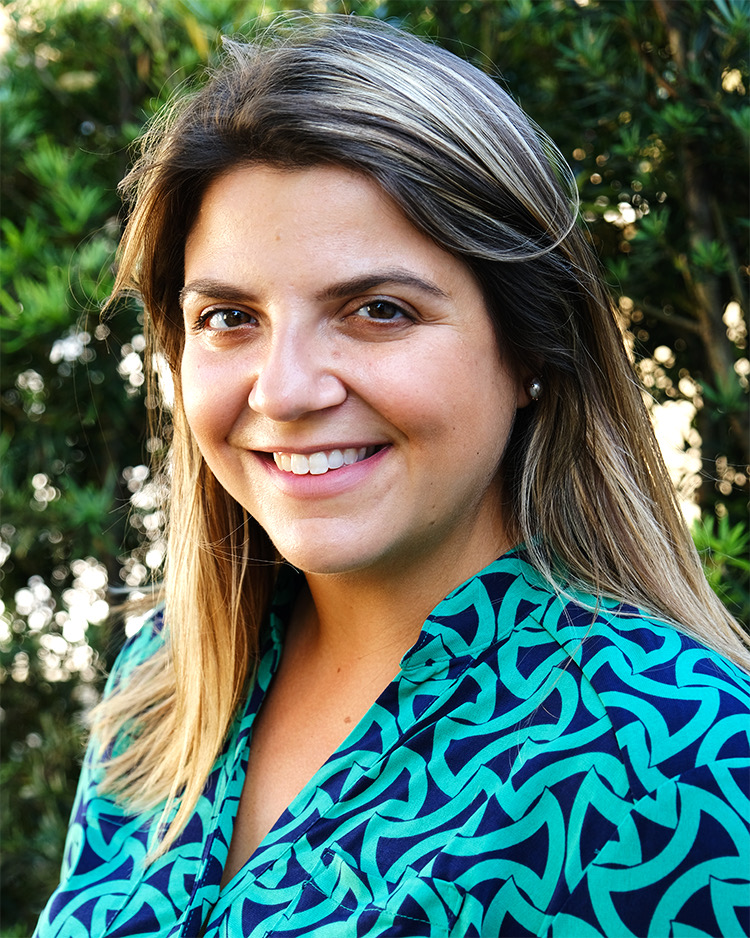
Director, Graduate Student Research Center
Albizu University, Miami Campus
Dr. Amanda Giust holds an Ed.D. in Adult Education and Human Resource Development from Florida International University. She has experience educating young children, adolescents, and adults of all abilities. Dr. Giust has eight years of experience managing a variety of community and federal grants and three years of experience in classroom teaching. Dr. Giust’s research interests include diverse learners, learning across the lifespan, self-directed learning, and career development
Prof. Megan Eberhardt-Alstot
Learning Design Lead
Lecturer, School of Education
California State University, Channel Islands
Megan Eberhardt-Alstot is the Learning Design Lead for California State University Channel Islands (CSUCI) Digital Learning Unit. She is also a Lecturer in the School of Education. She earned her BA and Teaching Credential from Pepperdine University and her Master’s in Educational Leadership and Administrative Credential from CSUCI. Prior to joining CI, Megan spent ten years as a K-12 Educator. As part of the Learning Design Team she designs, develops and facilitates faculty learning experiences specific to online and mixed-modality teaching. She also co-created Learning Online 101, an online micro-course to prepare students for success as online learners. Megan is interested in learning innovation, learning science, and the intersection of pedagogy and technology to create empathetic, equitable and responsive learning environments.
Contact information:
Email: megan.eberhardt-alstot@csuci.edu
Lydia Dixon, Ph.D.
Assistant Professor of Health Science
California State University, Channel Islands
Lydia Z. Dixon is an Assistant Professor of Health Science at California State University, Channel Island and holds a PhD is in Anthropology from the University of California, Irvine. Her research is primarily ethnographic and examines health systems and health disparities in the US and Mexico. Specifically, Dr. Dixon has published on midwifery, reproductive health, community health and obstetric violence. Her teaching focuses on ethics, community health, and research methods. She is passionate about inspiring her students towards careers in research and practice through active learning in classroom and virtual spaces.
Contact information:
Email: lydia.dixon@csuci.edu
Jaime Hannans, PhD, RN, CNE
Associate Professor, Nursing
California State University, Channel Islands
Jaime Hannans PhD, RN, CNE is Associate Professor of Nursing at California State University Channel Islands. Dr. Hannans obtained her BSN and MSN from CSU, Chico, and PhD from University of Nevada, Las Vegas. Dr. Hannans has been teaching at CSUCI since 2009, with 20-years critical care nursing experience. She is also the CSU Affordable Learning Solutions (AL$) Campus Co-Coordinator, where the campus effort has saved students over five million dollars in the past five years. Her research interests focused on immersive virtual reality, mixed reality, simulation, technology in teaching and learning, textbook affordability, and the use of open educational resources in higher education.
Contact information:
Email: jaime.hannans@csuci.edu
Webpage: jaimeahannans.com